Distracted driving needs uniform restrictions

By: Max Heine | March 9, 2010

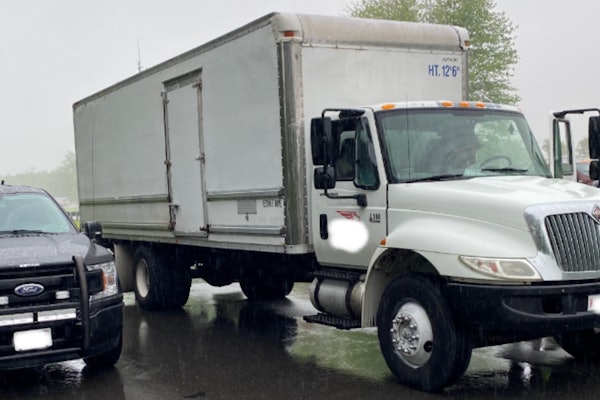
It’s a pity that it takes the heavy hand of government to ban practices that common sense would say are stupid, if not deadly. Such is the case with text messaging while driving, which the U.S. Dept. of Transportation recently outlawed for commercial drivers.

Studies show that texting and related behaviors – talking on a cell phone or reaching for an electronic device – increase crash risk at a much higher rate for truckers than for four-wheelers. Presumably trucks’ much greater stopping distance is the reason.

Looking at the broader picture of accidents and fatalities, the biggest group of motorized killers isn’t truckers. Of the 34,017 motor vehicle fatalities in 2008, 4,229 involved large trucks. Most of the truck-related accidents were not the fault of the truck driver.

It’s hard to determine the true number of fatal accidents due to communicating on electronic devices, especially tasks that divert attention from driving. But studies have proven just how dangerous is texting, the most distracting of these practices. Drivers who send and receive text messages take their eyes off the road for an average of 4.6 seconds out of every 6 seconds while texting.

Texting is dangerous enough that President Obama signed an executive order directing federal employees not to engage in text messaging while driving government-owned vehicles.

Furthermore, texting is banned for all drivers in 19 states and the District of Columbia, according to the Insurance Institute for Highway Safety. There remain 31 states where four-wheelers can legally drive while staring at a tiny device to poke out messages, one letter at a time.

State legislatures can become quagmires of petty politics. As with members of Congress, state legislators too often are distracted drivers themselves – more concerned with protecting the interests of the most vocal lobby or the most generous donors than with focusing on simple measures that could protect lives. When a growing practice is eroding safety on highways used by the entire electorate, though, it’s time to act.

The federal government continues to tighten safety requirements for commercial drivers, as our stories in this issue about new regulatory initiatives make clear. Yet too many states skate by with lackadaisical attitudes when it comes to cracking down on four-wheeler licensing and enforcement issues that threaten safety. These include not just texting but alcohol violations and the absence of physical screening for elderly drivers.

Indeed, commercial trucks are inherently more dangerous than other vehicles for their massive size. But that factor is more than made up for by the number of other vehicles on the road, too many of which are driven by people whose driving skills on average are inferior to commercial drivers.

No state needs to offer unreasonable freedoms to a certain class of drivers. Safety restrictions that are prudent for professional drivers should also be prudent for amateurs. The innocent highway victim killed by a weapon on four wheels is just as dead as the victim killed by one on 18.

This post currently has no responses.

Print

Watermelon Slim – on the road again with a killer sound

By: Max Heine | March 7, 2010

It’s not every day that we trucking editors get a private lunchtime concert, but such was the case Friday here at the offices of Overdrive and Truckers News. Former trucker Bill Homans, who records and tours as Watermelon Slim, had an evening set scheduled in downtown Tuscaloosa. He got to town early enough to treat us to a solo performance.

Watermelon Slim performs at Overdrive's office.

Watermelon Slim performs at Overdrive's office.

Slim can coax more slide blues sounds than I thought existed from his dobro guitar, which he plays lap-style, lefthanded and backwards. Add his authentic Mississippi Delta growl, coming from a road-worn face that makes Keith Richards look pretty, and you’ve got one fine performance.

Slim’s driving days date to 1969, when he was trained to drive in the military. He’s been in and out of the industry since, giving up trucking for good in 2004. But he and his dog are still doing a lot of driving on his “No Paid Holidays” tour that started this month, roams the nation through May, then moves overseas and to Canada for June through September.


Check here for his schedule and to view his website. If you’re planning to go to the Mid-America Trucking Show and can get to Louisville, Ky., a few days early, you can catch him Tuesday, March 23, at Stevie Ray’s.

Slim’s performing solo on his early dates, but most others are with his band, Watermelon Slim and the Workers, which has a more mainstream, country-blues sound. They’ve got a new album, “Escape from the Chicken Coop,” packed with great songs about trucking or the road. Here’s one to sample, “Caterpillar Whine.”


This post currently has no responses.

Print

Arrow Trucking: Lawsuits, blame and good news

By: Max Heine | February 24, 2010

Some new developments emerged in recent days with Arrow Trucking, now two months after its Dec. 22 closing.

Two items are from the Tulsa World. One details how lawsuits filed individually against executives are moving forward even though bankruptcy proceedings protect the company  from further lawsuits. Several of the civil cases are against Former CEO Doug Pielsticker.

In the other, Pielsticker responds to allegations against him “by claiming that his former chief financial officer is primarily responsible for fraudulent invoices, millions of dollars in unpaid federal taxes and the demise of the company.”

And finally, Landline magazine reports that some of Arrow’s former drivers are going to be able to refinance their trucks and complete their lease-purchases. This had been in doubt after it was disclosed that Arrow was not in a position to sell the trucks to begin with.


This post currently has no responses.

Print

Credit card statements include free cold shower

By: Max Heine | February 22, 2010

You might have heard that banks have to play by new rules with their credit card terms and disclosures, starting today.

If you’ve never faced the music when it comes to credit card abuse, your chance is about to come. One of the more digestible – and eye-popping – bits of information that now must be disclosed is how long it will take you to pay off your balance if you make only the minimum monthly payment. Also helpful will be a computation of how much you need to pay each month to wipe out the balance in three years.

Credit cards are wonderful tools for long-haul owner-operators. Unless they’re used wisely, they’re also wonderful traps. If your credit situation isn’t under control, use this new information as a motivator to cut costs, boost revenue, sell assets – whatever it takes to be in charge of your finances instead of your finances being in charge of you. Talk to your accountant if you need help.

Credit card abuse is a two-way street, and this law’s purpose is to end, or at least curb, lenders’ greedy and sneaky practices. These include abrupt raises in interest rates, outrageous service fees and fees for exceeding credit limits, too-brief grace periods for making a payment, and aggressive “universal default” fees (triggered by late payments on things like utility bills).

You’ll find more detail here.


This post currently has no responses.

Print

‘Ice Road Trucker’ comes home to thaw

By: Max Heine | February 11, 2010

Carlile Transportation's George Spears

Carlile Transportation's George Spears

When I rode with Alaskan Haul Road driver George Spears in the summer of 2006, he was planning to retire in the next year or so. However, he kept postponing the day.

Then he was asked to stay for production of the third season of the History Channel’s “Ice Road Truckers” during the 2008-2009 winter. It was the first time the show was done on the Dalton Highway, known as the Haul Road, between Fairbanks and Prudhoe Bay.

Spears says season four is also on the Haul Road, with many of the same characters. The producers filmed Spears’ retirement party, so if that makes the final edit, viewers will get one last look at him.

“They wanted to make it official that I took off and left,” Spears said this week from his home in Greenup, Ill. That’s near … well, it’s not really near anything, but it’s on I-70 west of Terre Haute, Ind. Spears has a farm there, as well as his mother and two sisters –  and no shortage of fans.

“I didn’t realize that many people were going to watch that crazy show,” Spears says.  “Everywhere you go, people recognize you.”

And some of the attention is from companies wanting him to drive, but he’s only interested in various personal projects. “I ended up hauling corn to town for the old boy that farms my place,” he says. “I tell you what, I looked good in that old day cab.”

Those going to the Mid-American Trucking Show in Louisville, Ky., might get a glimpse of Spears, who plans to attend all three days, March 25-27. He’s been asked to help with the Rockwood Products booth, though he says he also really wants to see the show, so look for him elsewhere on the floor, too.

The next season of “Ice Road Truckers” will launch this summer, featuring some returning drivers and two new ones, says History Channel spokeswoman Vicky Kahn. “This season will focus on monster loads that require dual trucks as well as an ice road over a river,” she says.


This post currently has one response.

Print

Is it recovery yet?

By: Max Heine | February 5, 2010

It’s hard some weeks to stack up the economic reports and figure if things are getting better or worse. This week was no exception, though the manufacturing stats are generally good, and that’s good for trucking.

These reports come from stories or press releases from the American Trucking Association’s Weekly Economic Recap, The New York Times, FTR Associates and the Institute for Supply Management.

First, the bad news: 

  • January Class 8 North American truck orders were 6,221 units, the lowest level since July of 2002, based on preliminary data.  January’s order activity was down 46 percent from December and was 20 percent lower than the same month a year ago.
  • Motor carriers employed 84,100 fewer people in January than they did a year ago.
  • The U.S. Department of Labor (DOL) reported that payrolls were cut by 20,000 in January, meaning employers have slashed employment in 24 of the past 25 months for a total loss of 8.4 million jobs.

And the good news: 

  • Those 20,000 jobs lost in January “marked a continued decline in the pace of deterioration,” notes The New York Times. “Economists focused on a host of encouraging signs that suggested recovery following the worst recession since the Great Depression.” These included growth in manufacturing jobs and temporary jobs, as well as the length of the workweek.
  • Manufacturing expanded in January for the sixth consecutive month, and the overall economy grew for the ninth consecutive month, according to executives polled by the Institute for Supply Management.
  • In spite of some bad employment numbers, the unemployment rate fell to 9.7 percent in January from 10.0 percent in December. January’s rate was the lowest since August 2009. 
  • For-hire trucking companies boosted employment for the second time in three months, adding 2,500 workers in January. 
  • The U.S. Department of Commerce reported orders for manufactured goods increased in December for the eighth time in nine months.


This post currently has no responses.

Print

A confident public and stronger freight

By: Max Heine | January 27, 2010

Two bits of news breaking Wednesday offered some encouragement that the economy, and trucking with it, will continue rebounding in the near future.

One was the fourth-quarter earnings report from Landstar System, the nation’s largest owner-operator fleet. While revenue and profits were down for the quarter, things are looking up, says Chairman, President and CEO Henry Gerkens: 

“As we moved through the 2009 fourth quarter, both the number of loads and rate per load continued to show signs of strengthening.  Through the first several weeks of January, I have seen daily volume increases of approximately 5 to 10 percent compared to January 2009, while rate per load continues to show improvement.  Assuming these trends continue for the balance of the quarter, I would anticipate 2010 first quarter revenue to increase over the 2009 first quarter revenue in a mid- to upper single digit range.” 

Here’s Landstar’s full report.

The other item was the report that consumer confidence rose for the third consecutive month.

“Consumers’ assessment of present-day conditions was, on the whole, more positive than last month,” sys the Conference Board, the group that tracks this indicator.  Yet, says the board’s Lynn Franco, “Consumers’ short-term outlook, while moderately more positive, does not suggest any significant pickup in activity in the coming months. Regarding their financial situation, while consumers were less dire about their income prospects than in December, the number of pessimists continues to outnumber the optimists.” 

This post currently has no responses.

Print

More bad news about your lifestyle

By: Max Heine | January 21, 2010

Trucking’s lifestyle has always gotten a bad rap for its impact on health because of driver inactivity, stress and poor diet, among other things. New studies bring even more bad news, and you don’t want to take this sitting down: Staying seated for prolonged periods, even when combined with regular exercise, could be bad for your health.

If there’s any consolation, it’s that professional drivers are hardly the only ones affected. Office workers, students, couch potatoes — anyone who spends too many daily hours off their feet is more likely to be fat and suffer the associated problems.

The studies indicate that interrupting prolonged sitting can be helpful. So take advantage of any stops you make and get in an extra five or 10 minutes of walking.


This post currently has no responses.

Print

Early warning signs at Arrow Trucking

By: Max Heine | January 18, 2010

One of the lessons to come out of the Arrow Trucking collapse is to recognize warning signs and take appropriate action. There have been reports of drivers paychecks bouncing in the final weeks, but apparently other signs surfaced long before then.

Mark Miller of Portland, who’s still fighting to clear the title for his 2006 Kenworth T600 he acquired in an Arrow lease-purchase program, told me of repeated appeals he and others had to make while on the road when denied permission to use escrow funds for maintenance. Not to mention three cases where his escrow funds were withdrawn for repair work at Arrow’s shop that was never done. “So I threatened to sue them, and the money reappeared mysteriously,” he says.

The company’s reputation for being reluctant to pay repair bills on the road eventually led to some of the major truck stop chains requiring payment in advance, Miller says.

Last February, when the company sent out a second 2008 tax form, correcting figures from the first one, it got his attention. “The minute I saw that, I knew they had two sets of books,” he says.

“I’ve been warning drivers of this for over a year,” Miller says. “I told everyone the same thing: Have $300 in your pocket because they’re going to abandon you.” Many disagreed, saying the owners were putting their own money into the stable, 61-year company. “I said, ‘No, they’re robbing us blind. I’d start looking for another job.’”

Unfortunately, those in Miller’s position couldn’t just walk away because they had thousands of dollars invested in their lease-purchase. For some, there was no way out. “Guys with three or four years worth of payments, some of them had their trucks taken back,” he says, after Arrow cut their miles and made it virtually impossible for them to make payments.

Miller says that was about to happen to him in August. He immediately sold some assets, paid off his truck early and leased to another carrier, only to learn later that Arrow had refinanced his truck without his knowledge. Now he’s unable to drive until he can clear his title from its lien.

Arrow officials have been unavailable to respond to these and many other charges against them, some of which have now taken the form of lawsuits.


This post currently has no responses.

Print
  • Randall-Reilly™
  • ©2009 Overdrive Magazine