










The less-than-stellar economy in the second half of 2022 that lingered through 2025 put many owner-operators, especially independents, in a tight financial situation.
Thankfully, many owners finally, after two years' worth of declines, actually improved income in both '24 and '25 despite the rough revenue and freight-rates picture.
Even in more ordinary times, it’s not unusual for a struggling business owner to consider some kind of relief in the form of lending, taking on debt to stay in business. Be very wary of credit card debt, easy to run up and usually carrying very high interest rates. Also beware other loans with high rates and high late-payment penalties, such as merchant cash advances.
By budgeting for downturns with routine emergency savings, tracking costs per day and per mile, and making disciplined decisions about fuel efficiency and load choice, planners have not only stayed in business -- many increased take-home income year-over-year, even in the freight-rates famine of those recent years.
Such owners might never have the need to lean on lending sources.
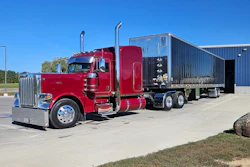
September 2025 Overdrive Trucker of the Month John Treadway's nest egg helped him through a catastrophic engine failure in his 1998 Peterbilt 379. He had also planned ahead beyond the finances with a back-up truck he was able to jump into to keep customers happy while his principal unit was idle at the shop.
Other exceptional owners suggest building up as much as $35,000-$40,000 for a maintenance savings account. Put money away each month until you reach your goal. That range should be enough to cover about the worst maintenance need -- an engine overhaul -- should you need it.
For those who do relief through lending, find resources below, as well as strategies other than borrowing, that an owner-operator or small fleet business could tap to help manage a cash-flow crisis.
U.S. Small Business Administration (SBA) loans. Long before 2020’s federal Paycheck Protection Program, a pandemic-relief program administered by SBA through banks, SBA loans had been considered some of the best for small businesses, particularly the SBA 7(a) loan. You have to work through one of the agency’s approved banks, but the terms are likely to be better than what you’d get working through a bank outside of SBA.
Bank lines of credit and term loans. These are common for small-business borrowers. Most term loans require repayment in one to five years.
Personal loans. Friends and family are traditional sources of borrowing or investing for an individual with a small business.
Tapping retirement savings. Perhaps you have 401(k) savings from prior work as a company driver. Or you or your spouse have Individual Retirement Account savings. These can be attractive funding sources, but withdrawals before you turn 59.5 will incur a 10% tax penalty -- with a few exceptions. For example, you can borrow from a traditional 401(k) and pay back the money over five years. Interest accrues to your account, but there is no penalty.
If you're saving in the Roth variant of an IRA or 401(k), the already-taxed principal contributions can be withdrawn, too, usually without penalty depending on your plan's rules. If you dip into the earnings, though, you'll certainly be taxed on those.
Debt consolidation. When a small business finds itself drowning in loans whose debt service exceeds the business’s revenue, consolidating the debt into a single loan is one option. The goal is to lower monthly payments by lengthening the repayment schedule so the business can stay afloat. Experts caution that terms can be onerous and do little to help the owner’s long-term prospects.
Debt forgiveness. Certain lawyers and other specialists can help heavily indebted borrowers to negotiate with creditors a reduction in debt. The approach can wipe out thousands of dollars in debt, but one downside is taking a hit to your credit rating, which drives up the cost of any future borrowing. Another downside: your legal fees to the negotiator can be substantial.
Bankruptcy. Filing for Chapter 11 bankruptcy -- a plan to reorganize debt while continuing to operate -- often isn’t a good choice for a small business. Chapter 11 is an expensive process that usually drags out over years. It’s more often used by large corporations, though a small business can find it more favorable than Chapter 7 bankruptcy filing because it gives a longer time -- 180 days -- to work out arrangements with creditors. Chapter 7, which allows only about two weeks, is intended for liquidating assets to pay debts.
Read next: With ID theft on the rise, guarding your trucking business is a necessity