











A freight intelligence firm thinks it's cracked the code to carrier vetting without the tracking and paperwork hassles most carriers dread.
With the cargo theft and carrier vetting madness imposing hours of additional labor on almost every single spot freight transaction, one company thinks it’s found a simple way to focus on what matters: Did the freight move point A to point B intact?
The carrier vetting industry, which sprang up in response to the simmering “fraud apocalypse” hounding load boards and the spot market as a whole, has long focused on using Federal Motor Carrier Safety Administration data, insurance info, and telematics and ELD integrations to tell which carriers can or can't be trusted.
[Related: Highway denies selling, storing or otherwise snooping on ELD data]
But it’s never really worked out. Carriers hate it, and cargo theft until recently has only gotten worse and worse.
Plus, a thriving market for MC number sales, where a carrier in good standing can get tens of thousands of dollars for handing over their credentials to a fraudster, kind of defeats the point of exhaustively collecting data on each MC.
Now, Class8, a freight-intelligence company, may have outsmarted the industry with an entirely new approach to judging the trustworthiness of carriers -- and it came about almost by accident.
Class8 gets one piece of data no current carrier vetting firm has -- real-time axle-weight updates.
“We have partnerships with Daimler, Volvo, and Mack to get axle-weight data, which is a propriety metric you can’t obtain from an ELD ,” said Chris Atkinson, CEO of Class8. “We get that data from the OEMs, and it’s granular enough that we know what type of truck is in operation,” whether it’s heavy-haul, power-only, etc.
Trucks with ECUs from 2019 and newer actually produce data on axle weights, including on the trailer.
Initially, Class8 used that data to offer load matching services for truck owners. Mack, Volvo and Daimler have Load Finder services for newer trucks, in partnership with Class8, which account for the truck's exact specs and weight. Class8 uses that data for "load matching" services, Atkinson said, where truck owners "receive load recommendations based on vehicle data ... and axle weight is a critical metric for that."
But recently Atkinson realized there's another potential application for their axle-weight data.
"We only realized within the last three to four weeks that we could use this to identify theft, but it's fairly obvious," he said.
The idea is that if something comes off the truck, Class8's tech can catch it.
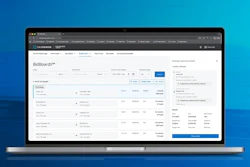
"Our system detects cargo weight drops, identifies unusual stop locations using advanced analysis, and flags risky behaviors like stops at odd hours," the company shared in a report with Overdrive. "This approach effectively distinguishes between normal activity, like stopping at authorized warehouses or truck stops, and suspicious activity in remote, unauthorized areas."
Even when Class8 isn't tracking the load via ELD, it can still catch and validate unauthorized offloads by bringing together satellite imagery, tech savvy, and a bit of common sense.
With access to tons of OEM data on axle-weight changes, Class8 used AI to get a feel for which drops are normal, and which are theft.
"We modeled normal freight behavior across axle-weight changes, stops, lanes, markets, time of day, and location context," the company's report said. Since the drivers and companies didn't even know their axle weight was being watched, Class8 was able to flag what's normal and what's not. "No declared destination is needed to see a heavy truck unloading in an unusual place at an unusual time."
Basically, if a truck off-loads in the middle of nowhere, in the middle of the night, Class8 will see it, flag it, and confirm via satellite.
"This is strengthened by off-hours timing or satellite imagery showing a remote lot, pull-off, field, or desert, turning a suspicious stop into an investigative lead instead of waiting for a loss report," Atkinson said.
 These are satellite images Class8 uses to validate its methodology. Both locations saw significant weight come off a trailer. On the left, a regular depot in El Paso, Texas, doesn't raise any eyebrows, but this empty section of road in Kingman, Arizona, raised a big red flag.Class8
The result, according to Atkinson, represents something of a new way for carrier vetting, one that doesn't rely on intrusive ELD integrations.
"When dealing with the ECU, we're dealing with something tamper-proof, whereas you can tamper with an ELD," he said. "The only reason that’s relevant is because if we’re saying that you did this -- that the truck performed a pick-up or drop-off -- that's because we know for sure it's true."
Truth then, not statistics, could reshape carrier vetting as we know it, he reckons.
"More security with less surveillance is real efficiency," said Atkinson.
That's the "real value" to axle-weight monitoring, he said -- cutting through the series of hoops a carrier has to jump through to get loaded in 2026.
Ultimately, carrier vetting solutions have just become too burdensome, with some requiring a subscription fee, ELD integrations, or even a carrier's banking information.
Checking on axle weight and leaving most other tracking and stats behind could function as a reality check for the industry.
"The optimal amount of fraud in any market is not zero," said Atkinson.
Basically, freight fraud will never completely go away, and much of the effort spent to prevent freight fraud only gets in the way of good actors.
"With all of the systems to eliminate fraud creating such inefficiency, the market doesn’t function the way it otherwise should," said Atkinson. "We don't want to eliminate access to [freight] that otherwise should be accessible."
That might ring true for carriers with limited inspection data or no inspections at all.
"If your VIN is eligible," by having a post-2019 Volvo, Daimler or Mack truck (Atkinson hopes to include Paccar and International by the end of the year), then a carrier is "able to stand on top of real data and say 'I do run these lanes, I am an active carrier, I am productive, and I have a signal here that is going to give you confidence that you’re not going to lose freight when you work with me.'"
Atkinson hopes to get through to some brokers and vetting firms before long.
"We want to become a vetting standard, and we believe that the ideal path to that is by working with the businesses that have already established a footprint in the world of vetting carriers," he said. "We also believe that there’s is an opportunity to provide this data to our brokerage partners."
[Related: FMCSA, Congress work with 'carrier vetting' industry amid fraud crackdown]