










Trucking news and briefs for Wednesday, Nov. 25, 2026:
- Raise cargo theft awareness during Thanksgiving holiday.
- $30K to deliver drugs from California to Tennessee leads to 12-plus years in prison.
- Cardless fuel payment provider expands network.
CargoNet issues Thanksgiving theft warning
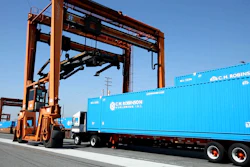
During the last five Thanksgiving holiday periods, Verisk CargoNet has recorded 252 cargo theft incidents with an estimated combined loss value of about $23.9 million. Annual thefts rose from 29 in 2021 to a five-year high of 79 in 2024 before falling to 58 thefts last year.
CargoNet this year shines light on a growing scheme in which cybercriminals posing as drivers and dispatchers respond to carriers' job postings on social media, gain access to company email and phone systems, and use those systems to bid on and steal shipments in the carrier's name.
Thieves also continue to favor full truckloads of metals and data center computing hardware.
 The firm recommends that shippers, brokers and carriers tighten security and verification from Tuesday, Nov. 24, through Monday, Nov. 30.Verisk CargoNet
CargoNet's concern is not only what is being stolen, but how criminals are gaining access to freight. Cybercriminals are operating under the identities of legitimate carriers, and a growing number are able to execute thefts through standard carrier practices.
[Related: ITS Logistics skimps carriers almost $40K after falling for cargo-theft scam]
The firm noted that thieves typically strike around the holiday, not on it. The Tuesday and Wednesday before Thanksgiving and the Monday after accounted for 62% of incidents during the last five Thanksgiving periods. Thieves appear to take a bit of a break with the national holiday, as it were: Thanksgiving Day itself has been the quietest day.
Activity is concentrated in a few places and products. California, Illinois and Texas accounted for 56% of incidents, led by San Bernardino and Los Angeles counties in California. Thieves targeted food and beverage shipments most often, followed by household goods and electronics.
So far in 2026, targeted hardware includes fully assembled racks and computing platforms, and networking and security appliances. Thieves also target components such as fiber optic transceivers, central processors, graphics processors and memory chips. Through September, the average documented value of a stolen shipment was $448,456, up 72% from the same period in 2025.
Theft of unattended trailers and parked truck and trailer break-ins remain common, but among the schemes of greatest concern this season are highly technical tactics in which criminals operate under the identity of a legitimate carrier, CargoNet said. They compromise a carrier's email account, deceive a carrier already hauling a shipment into delivering it elsewhere, or buy an existing carrier’s credentials.
As noted, fraudulent hiring gets more common by the day. Once hired, criminals work to gain access to the company's official email and phone systems and then bid on shipments in the carrier's name, stealing the freight. CargoNet has traced reports of fraudulent hires to job postings that carriers had recently placed on social media. In most cases, the carrier hired the driver or dispatcher online without ever meeting the candidate.
Conducting those face-to-face meetings, with thorough background and reference checks, and validating contact information may have prevented some of these cases, the firm said.
Cybercriminals understand that short staffing around holidays can make these tactics more likely to succeed. Fewer people may be available to vet a new hire, verify a caller, or notice an unusual email. CargoNet recommends that every party in the supply chain put additional security and verification measures in place.
[Related: Owner-operator jailed after unwitting participation in cargo theft: Cautionary tale]
Truck driver sentenced for trafficking cocaine, fentanyl
A trip from California to Memphis to deliver large amounts of narcotics ended prematurely in Arkansas for truck driver Claude Bell, who will now spend 12.5 years (151 months) in federal prison for possession with intent to distribute five kilograms or more of cocaine.
A federal grand jury charged Bell, 58, of Lancaster, California, in a two-count indictment for possession with intent to distribute cocaine and possession with intent to distribute fentanyl. On May 14, 2026, Bell pleaded guilty to possession with intent to distribute five kilograms or more of cocaine. Chief United States District Judge Kristine G. Baker also sentenced Bell to five years’ supervised release. There is no parole in the federal system.
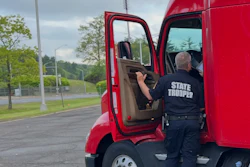
According to a press release from U.S. Attorney Jonathan D. Ross for the Eastern District of Arkansas, on May 19, 2025, a trooper with the Arkansas State Police conducted a traffic stop in Russellville on a tractor-trailer being driven by Bell.
During the stop, the trooper observed Bell behaving nervously. Bell did not have a logbook to show his driving time, and at that point, the trooper obtained consent from Bell to search the tractor and trailer.
During a search of the sleeper area of the truck’s cab, the trooper located four boxes containing packages of approximately 86 pounds of cocaine and 34 pounds of fentanyl. Bell was placed under arrest and agents from the Drug Enforcement Administration (DEA) arrived on-scene, taking custody of the packaged cocaine and fentanyl.
During a post-Miranda interview, Bell admitted he was paid $30,000 to transport the cocaine from Bueno Park, California, to Memphis, Tennessee. Based on a search warrant, officers reviewed Bell’s cell phone, which showed he picked up the boxes in California and was traveling to deliver them to an individual at a gas station in Memphis.
Bell’s prior felony convictions, which date back to 1987, include robbery, vehicle grand theft, second degree burglary of a vehicle, second-degree robbery, and second-degree attempted burglary.
[Related: Alleged drug traffickers duped 'unknowing' trucker for transport]
Piston fuel payments now accepted at Refuel stations
Cardless fuel payment network Piston continues to expand, as its payments are now accepted at 246 Refuel locations in North Carolina, South Carolina, Mississippi, Arkansas, and Texas.
The rollout is complete at every participating store, and it responds directly to fleet operators in those markets who have been asking Piston for more stations in the regions, the company said.
Piston said it offers a modern payment stack for commerce at the pump, where drivers initiate each purchase on their phone instead of with a physical card, and every transaction is tied to a specific driver and vehicle -- fleet managers can thus track spending as it happens.
Its direct integration with the merchant's point of sale gives Piston richer transaction data than open-loop networks can see, which strengthens fraud prevention, the company said.
Working directly with retailers also removes several intermediaries, which lowers costs for fleets and merchants. That direct relationship also means fleets get more competitive fuel discounts than they would through traditional card networks.
For Refuel, Piston becomes an additional payment option at participating stores alongside the methods customers already use, gaining a new channel to the fleets that already fuel with Piston, too.
Headquartered in North Charleston, South Carolina, Refuel operates convenience stores under the Refuel and Double Quick brands, offering fuel along with hot food, fresh grab-and-go options, and everyday essentials.
The Refuel launch follows Piston's recent expansion to 341 Jacksons Food Stores locations in the western U.S. Piston is now accepted at more than 7,000 fuel stations across 48 states.
[Related: Truckers' tools to prevent fuel fraud, from complex AI to simple cybersecurity self-help]