











So there we were, me and Kalen, rolling into the Joplin 44 Petro just off I-44 -- bright lights, diesel humming, the whole place lit up like a small city that never sleeps.
Five months earlier, my wife had thrown a coffee mug at the kitchen wall. It shattered. So did something else.
“I don’t even know who you are anymore,” she’d said.
I didn’t have an answer then. I didn’t have one now.
My phone buzzed in my pocket. Her name.
I let it ring.
My Australian co-driver Kalen, of course, was already working the room -- chatting up the barista like we weren’t just passing through. That was his gift. Everything was temporary, so everything was possible.
My phone buzzed again.
I turned it off.
We wandered the store, past chrome parts and overpriced snacks, but I wasn’t seeing any of it. Just that kitchen. That wall. That look on her face.
Out in the lot, I saw him.
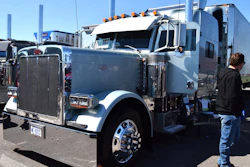
Older driver. Leaning against a worn Peterbilt, cigarette burning low. The kind of guy who looked like he’d seen every version of this work.
“Hell of a night,” I said.
He looked me over once. “You look like hell.”
“Feel like it too.”
He handed me a cigarette. I don’t smoke, but I took it anyway.
“Wife?” he asked.
I nodded.
“They think we’re running,” he said. “Out here on the road.”
He took a drag, looked out over the lot. “Sometimes they’re right.”
I didn’t say anything.
Then he shifted, like he’d hit something real.
“My wife -- Martha -- packs my lunch every morning. Forty years now. Gets up at four, makes sure I got something decent.”
He smiled a little, but it wasn’t for me. “Told her she didn’t have to anymore. Said I could grab something out here.” He shook his head. “She said she’s been doing it forty years and she ain’t about to stop. Said it’s how she knows I’m coming home.”
That one landed.
He pulled out his phone, showed me pictures. Kids. Grandkids. “They call me Grandpa Road,” he said, almost laughing.
I thought about my wife. How she used to have coffee ready in the morning. How I’d stopped noticing.
“Road’s good for thinking,” he said, flicking ash. “But it ain’t good for living. Real life’s back home.”
He crushed the cigarette under his boot. “Answer the damn phone next time she calls. That woman’s probably wondering if you’re dead in a ditch.”
He climbed into his truck and pulled out, taillights disappearing into the line heading west.
I stood there a minute.
Then I turned my phone back on.
Seven missed calls.
Three voicemails.
The first was worried. The second was angry.
The third ... just tired.
“I don’t know where we are anymore,” she said. “But I’m still here. When you’re ready ... I’m still here.”
Still here.
Kalen walked up beside me. “You all right, mate?”
“No,” I said. “But I think I need to call her.”
He nodded. Didn’t say anything else.
We climbed back into the truck. The road was still there, same as always. Waiting. Promising distance.
But for the first time in a while, I wasn’t thinking about where it could take me.
Just where it might be leading me back to.
[Related: When a trailer tire calls it quits in Sudan]
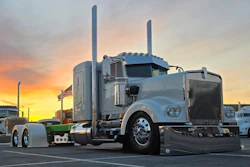
 Small fleet owner C.G. Soza once named a power unit "Always Headed Home," painting the legend on the backside of the visor as reminder.