











The Federal Motor Carrier Safety Administration has released new guidance on what to do about drivers being coerced into violating safety regulations as the agency cracks down on electronic logging device providers.
The new guidance, in the form of a quesiton-and-answer document, lays out clearly what coercion is, and what drivers can do about it.
Entitled "FAQs: Prohibited Coercion of CMV Drivers," the document was issued in late April "to help drivers understand how they might be coerced to violate safety regulations and what they can do if they believe they have been coerced."
FMCSA released the FAQ just a little over two weeks after the Super Ego chameleon carrier story made a splash in the mainstream news.
There's plenty of stories out there of freight fraud, bad broker behavior and skimping driver pay, but the Super Ego network's story stands out in that drivers allegedly were coerced into driving well past legal hours limits with ELDs manipulated, with company direction.
ELD/hours of service cheating is illegal for drivers, period, even if a fleet or other party twists an arm or two, or designs a lease system that demands an impossible number of miles to make ends meet.
Roadcheck, upcoming next week, will take a special look at such manipulation and the HOS violations it produces.
FMCSA's new FAQ specifically mentions drivers being coerced into falsifying logs or driving beyond hours limitations.
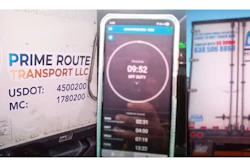
Overdrive recently published a driver's testimony, complete with video evidence alleging Prime Route, a carrier in Super Ego's chameleon network, had drivers cheat on their hours with company maniulation of their ELDs. The driver, participating in the Return to Duty program after a failed drug test, felt he had no choice but to run illegally.
Prime Route has since denied any wrongdoing, but without providing specifics.
What FMCSA is saying about the Coercion Rule (49 CFR 390.6)
FMCSA's new guidance says the “coercion rule”, 49 CFR 390.6, "is designed to protect commercial motor vehicle drivers from being pressured to violate the Federal Motor Carrier Safety Regulations (FMCSRs) by motor carriers, shippers, receivers, and transportation intermediaries (brokers) and their agents, officers, or representatives."
The agency gives the examples of drivers being pressured to run over hours limits, to falsify logs, speed, run unsafe equipment with known out-of-service defects, move overweight loads, or run when the driver is sick or has been drinking.
The regulatory definition of “coercion” in 49 CFR 390.5T specifically apply to brokers, too, featuring this part: "a threat to withhold business, employment, or work opportunities from a driver, a threat to take or permit adverse employment action against a driver, or actually taking any of these actions against a driver, which is done in order to induce the driver to take an action that would violate the FMCSRs or punish the driver for refusing to violate the FMCSRs."
FMCSA gives the following example of how coercion might play out in sequence.
- The Request: A carrier, shipper, or broker requests a driver perform a task that would violate a safety regulation.
- The Objection: The driver informs the requestor that the driver would not be able to complete the task without violating a regulation. This can be done in writing (for example, responding to a text message or email) or verbally during a conversation.
- The Threat or Negative Action: The requesting party makes a threat -- either direct or implied -- to take negative action against the driver's employment or work opportunities in order to pressure the driver to comply, or actually takes negative action to punish the driver for refusing to commit the violation. Importantly, the requesting party does not need to follow through on the threat -- just the fact that a threat was made is enough for coercion to have occurred.
Drivers filing a coercion complaint will need to set out the facts of how the coercion occurred.
While the coercion rules can apply to brokers or even shippers, they especially apply to employers. Employers "are prohibited from withholding business, employment or work opportunities from a driver, taking or permitting any adverse employment action against a driver, or threatening to" do so.
If a carrier does threatens to fire, deny future loads, reduce miles, cut pay or bonuses, impose fines, assign less-desirable routes or no loads at all, or even deliberately damaging a driver's reputation, that's all actionable, FMCSA wrote.
What drivers can do about coercion
"Coercion occurs the moment a threat is made," FMCSA wrote. "The driver does not actually have to commit the violation for coercion to have occurred."
Simply threatening a driver counts as a violation, or even punishing a driver for not committing a violation of FMCSR counts too.
In those cases, FMCSA advises the drivers keep detailed records such as copies of ELD messages, texts or emails. Drivers can even write up their own account of what happened "while it is fresh in his or her memory" and email it to themselves to have a timestamp.
Next, file a complaint with FMCSA.
"A written complaint must be filed within 90 calendar days of the incident and must be submitted to the National Consumer Complaint Database (NCCDB) or the FMCSA Division Administrator for the State where the driver is employed," FMCSA wrote.
Drivers can call 1-888-DOT-SAFT (1-888-368-7238) as well.
Make sure to include the following info:
- The driver's name, address, and telephone number.
- The name and business address of the person allegedly coercing the driver.
- The regulation(s) that the driver alleges he or she was coerced to violate.
- A concise but complete statement of the facts the driver is relying on to show that an incident involving coercion occurred, including the date of each alleged violation.
For more info, call the FMCSA Information Line, 1-800-832-5660 or read the FAQ directly.
[Related: Parties other than carriers now subject to enforcement under the coercion rule]