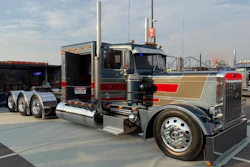













From Fredericksburg last night, as reported in the wee hours this morning, 50 bobtail trucks convoyed up I-95 and into downtown D.C., lining wide gravel walking paths along the National Mall between 4th and 7th streets, facing the Capitol Building. Inside, attention was no doubt focused on prospects for the nomination of Supreme Court judge Brett Kavanaugh, as it has been for weeks now, though plenty participants among owner-operators here did manage to take meetings with their reps and Senators, and more meetings are sure to follow.
If lawmakers bothered to take a quick look outside, though, it’s sure, they got a sight they just couldn’t miss.
For independent owner-operator Scott Hampton, it’s members of the public posing for their own pictures, and kids pulling the air horns, that has provided the chief moments of happiness.
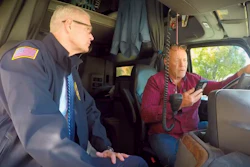
DeLorenzo’s message to owner-ops: Tell your story, essentially — illustrating clearly what you see as the issue with the current hours of service. When the agency says, back it up with data, “we mean data in the loosest sense of the word.”
Any owner-operator can tick off an average number of times, for instance, the 14-hour rule presents an untenable safety and/or business situation (if they can really be separated) on the road, something regulators might then extrapolate from to estimate safety impacts. “The lesson we’ve learned,” DeLorenzo said, over the last year and more since the grassroots in trucking has gotten more active, is that drivers not being heard “find a better way to communicate.” To an extent, DeLorenzo tipped his hat to the engagement of groups like those represented here.
Hampton, meanwhile, hoped the current “open door” Administrator Ray Martinez seems to have offered to owner-ops and drivers will continue. It’s not always been open, and in other circles of power and influence it clearly remains closed.