











With a trucker's strike start date of October 1 fast approaching, more and more drivers have publicly committed to parking, and the White House may have already taken notice.
One owner-operator said strike or no strike, a lot of capacity will inevitably shut down as diesel prices stay near record levels.
The latest Energy Information Administration data puts the average gallon of U.S. diesel fuel at $6.38 as of September 28, down almost 15 cents from last week. But, still, that's the kind of sticker shock that makes an owner-operator think long and hard about parking the truck.
"My opinion as a business owner, if a truck doesn’t make money, there's no point in starting the engine and going out and not being with your family," said Dumitru Malai, an owner-operator out of Pennyslvania.
Malai said he last paid around $6.50 a gallon in Pennsylvania, even after a discount, and that he's already parked up.
"They say they're gonna strike on October 1, but for me it doesn’t have to be a certain date, I'm parked all this week," he said.
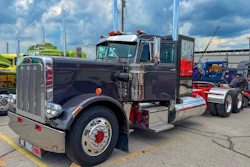
Malai runs a 2019 International LT625 with a Cummins that's "been reliable to me," he said. Pulling a 53-foot dry van, he said he gets around 7 mpg.
Not bad, but that still puts diesel costs for him at nearly a dollar for every mile.
"I calculate my truck mileage and whatnot," he said. With a rate at "three bucks a mile, a dollar goes to diesel, a dollar goes to tolls, and I still pay the truck and trailer insurance." Pennsylvania does have some of the highest tolls in the country.
Add the cost of maintenance on the truck and trailer, and Malai's firmly in the red or not far off. "Just working" for no reason, he said.
He's been sitting a while, he said, and will until rates come up. The "strike" then, for him, is less some moral stand and more of a business equation.
"I don't get why people don't [strike]," he said. "People are too scared."
[Related: 50,000 truckers striking Oct. 1? Here's what drivers are saying]
Another owner-operator, Greg Bazluki Jr., who said he has 40 years experience OTR, supported shutting down but also referred to it not as a strike, but a vacation.
"I'm on vacation, so my truck/trailer will be parked," he told Overdrive. "Will I be actively waving a 'I'm on strike' banner, walking some kind of line? Absolutely not."
Bazluki's leased, with his truck paid off, and offered a long list of grievances he felt worthy of a strike.
"More needs to happen on the ELP/fraudulent CDL issue before the argument on the fuel price profiteering," he said, noting that diesel, long about the same price as gasoline, now costs about $2.00 more per gallon.
[Related: Why is diesel getting so much more expensive than gasoline?]
Trump, states, and big business taking notice of truck driver concerns
While neither trucker really backed up the organized "strike" aspect of their "vacations," they both hit on a hard economic reality policymakers have noticed, even without 99.9999% of trucking lifting a finger.
Since the initial rumors circulated a couple weeks ago, President Donald Trump has reportedly been considering a ban on U.S. diesel exports to keep more fuel available domestically. Georgia Governor Brian Kemp paused fuel taxes, instantly dropping 37 cents off diesel prices in-state. Alabama Governor Kay Ivey last week told law enforcement to stop checking trucks for dyed, off-road diesel, and Texas and Nebraska relaxed dyed-diesel regs for haulers in-state, too.
The U.S. Department of Transportation on September 17 gave fuel haulers a three-month HOS waiver, allowing 16 hours of drive time in an effort "to lower fuel costs."
Additionally an ExxonMobile refinery has come back online, in another good sign for domestic diesel production.
Big fleets, too, according to Malai, are slowly shutting down here and there.
"I have about three more friends who are parked," he said. "Right now you pass by all these big parking lots in any big city now you can see a lot of trucks are parked, there's no point in driving."
Big fleets have to keep drivers on, so they need miles, but running unprofitably serves no one, he said. The big fleets "don't all park together," but coordinate so that one driver parks a few days, and then another might. "They coordinate that kind of thing."
So while truck drivers might lack the big organization or daring (given general illegality) to stage a coordinated "strike," truck owners and drivers backing such an action are correct on the bigger point: The economy runs on diesel trucks, and if leaders in business and politics are smart, they'll listen when truckers say it's just no longer profitable to run the truck.
[Related: Owner-op income near record high already, early in upcycle: ATBS]