










Trucking news and briefs for Wednesday, Feb. 4, 2026:
- Winter-storm relief haulers get more HOS relief; spot rates up in all segments in the aftermath last week.
- Fraudulent trucking investment company shut down, fined.
- More safety for tow truck drivers the goal of new legislation.
FMCSA extends 40-state emergency declaration
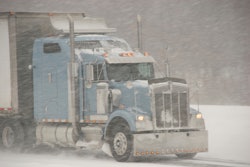
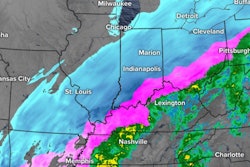
The Federal Motor Carrier Safety Administration on Tuesday extended its Regional Emergency Declaration providing hours-of-service relief for truck drivers and motor carriers providing winter-storm relief in 40 states.
The waiver, FMCSA said, “supports urgent winter emergency response while maintaining overall safety.” Emergency relief only applies to qualifying operations as detailed in the waiver.
The waiver was first issued Jan. 23 and was effective through Feb. 6. With the extension, the waiver is now effective through Feb. 20.
The declaration waives Part 395.3 -- maximum driving time for property-carrying vehicles -- of the hours-of-service regulations for Motor carriers and drivers providing direct assistance to emergency relief efforts in the affected states. Relief applies regardless of trip origin, as long as the operation supports emergency relief in the affected states.
The full list of affected states can be viewed here.
[Related: Hours-of-service waiver declared in 40 states for winter weather, interstate closures]
As recovery efforts continue all around the nation in hardest-hit areas, the spot rates bump market watchers predicted came to ground last week, according to the latest snapshot report from Truckstop.com and FTR Transportation Intelligence.
Big gains for vans and reefers put national average rates back near the holiday-end peak at the beginning of the year.
[Related: ITS Logistics shorts carrier almost $40K after falling for cargo theft scam]
Fraudulent ‘trucking automation’ company permanently shut down, to pay $8.3M penalty
A federal district court has ordered a so-called “trucking automation” company permanently shut down its operation for defrauding consumers out of millions of dollars with deceptive promises of trucking industry investment opportunities.
The Federal Trade Commission and the state of Florida filed a lawsuit against the company, RivX, in 2024. RivX was issued a preliminary order then, shutting down its operations pending the trial.
A court order announced Jan. 28 banned RivX from engaging in a business or investment opportunity and entered an $8.39 million judgment against them.
The resolution of the case was achieved through the work of the Chairman’s Joint Labor Task Force, FTC said, which was established in February 2025 to prioritize rooting out and prosecuting deceptive, unfair, and anticompetitive labor-market practices that harm American workers.
“RivX falsely claimed that consumers could make tens of thousands of dollars through trucking industry business opportunities,” said Christopher Mufarrige, Director of the FTC’s Bureau of Consumer Protection. “Operations like this not only harm individual consumers who buy in but can influence others’ decisions about whether to invest in legitimate business opportunities. The FTC is committed to protecting America’s workers from business opportunity scams.”
[Related: Florida fleet owner charged in alleged $112M Ponzi scheme]
According to the August 2024 complaint filed jointly by the FTC and Florida, RivX offered consumers the opportunity to invest in the trucking industry, claiming that after they pay $75,000 or more, RivX would buy a semi-truck in their name and operate it on their behalf, securing loads, drivers, and managing all the logistics.
In its advertising and marketing, FTC said, RivX made claims about how much money consumers could earn from the scheme, but according to the complaint, very few ever received trucks, and none were able to recoup their investment, much less make any profit.
The complaint alleged that RivX and its owner, Antonio Rivodo, and company executive Noah Wooten took in millions of dollars from consumers while failing to provide anything approaching the profits they promised.
Based on this alleged conduct, the complaint charged the defendants with violating the FTC Act, FTC’s Business Opportunity Rule, the Consumer Review Fairness Act, and Florida’s Deceptive and Unfair Trade Practices Act.
A federal court in Florida has granted the FTC’s request for default judgments against 10 defendants, ending litigation against them. They include defendants RivX Automation Corp.; RivX Trucking LLC; RivX Logistics LLC; Maceda Transportation Services, Inc.; C2 Carrier LLC; RivX Global Logistics LLC; Antonio Rivodo; and Noah Wooten as well as defaulting relief defendants Propihub LLC and RivX Investments LLC.
The default order bans them from engaging in any business or investment opportunity. The court also held the defaulting defendants liable for $8,390,025.99 in consumer injury. The court found that defaulting relief defendant Propihub LLC is responsible for $1,790,465.54 of the total amount, while RivX Investments LLC is responsible for paying $42,153.65.
A separate court order also settled the FTC’s complaint against Diamond Cargo LLC, which received funds or other assets that can be traced directly back to the RivX defendants’ unlawful conduct. In addition to a $15,000 payment, Diamond Cargo will be required to fully cooperate with and assist in the sale of certain RivX defendants’ trucks.
[Related: Alleged 'trucking automation' scam shut down after FTC lawsuit]
Legislation aims to improve safety for tow truck operators
Legislation introduced in the U.S. House aims to improve safety for heavy tow truck operators moving disabled tractor-trailers from busy highways.
Rep. Dave Taylor’s (R-Ohio) “Towing Safety Act” would allow tow truck operators to transport a large, disabled vehicle to a nearby location instead of being required to disassemble it at roadside. Federal length requirements often require tow truck operators to separate tractor-trailers being towed, Taylor said.
His bill would waive those federal length requirements for tow trucks responding to a wrecked or disabled vehicle on interstate highways, at the discretion of local officials, so they can tow the affected vehicle to a safe location.
“As someone who ran my own company for decades, I would never want to put the lives of my workers or first responders at risk on the side of the road,” Taylor said. “Accidents and breakdowns on the shoulders of interstates and highways create hazardous conditions for drivers, tow truck operators, and police officers who are responding to an incident. My bill will save lives and ensure safety on our nation’s roads for all drivers by giving tow truck drivers flexibility in responding to wrecked or disabled vehicles in the case of an emergency.”
[Related: FTC's 'junk fees' rule could protect trucking from predatory towing]
Specifically, the Towing Safety Act would waive the federal length requirements for tow truck operators responding to, returning from, or transporting a wrecked or disabled vehicle, with the requirements that:
- The tow truck remains in-state and can safely operate on highway bridges along the route determined by the transportation agency of jurisdiction
- The vehicle being transported complies with existing federal law and regulations
Under current regulations, combination vehicles, which are defined as truck tractors with a semitrailer, or a trailer designed and used specifically to carry automobiles or boats in specially-designed racks, may not exceed a maximum overall vehicle length of 65 feet or 75 feet, depending on the type of connection between the tractor and trailer, when driving on interstate highways. However, with tractor-trailers being an average of 70 feet long, tow truck drivers are rarely able to transport them without disassembling them in order to comply with federal regulations.
Operating on the side of busy roads creates a high-risk environment for drivers, tow truck operators, and law enforcement officers, Taylor noted. Between 2015-2021, 123 tow truck operators were killed by passing vehicles, according to AAA.
The bill, introduced Feb. 2, has been referred to the House Committee on Transportation and Infrastructure.
[Related: 'Heavy Hook' 2024 389's tall order: Promoting tow-company positivity to trucking]