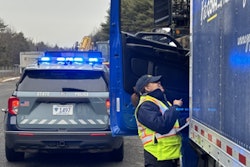












The Federal Motor Carrier Safety Administration is on the ground investigating an interconnected network of "chameleon carriers" after an "illegal alien" killed four in a crash in Indiana last week.
Within hours of the Department of Homeland Security announcing that "criminal illegal alien Bekzhan Beishekeev of Kyrgyzstan" was responsible for the quadruple-fatal crash on Indiana State Route 67, the Department of Transportation Secretary said FMCSA was on the case.
On Saturday, Secretary Sean Duffy gave an update, saying the "name of the carrier that employed the illegal is AJ Partners" and that FMCSA "is expanding the scope of the investigation to include a number of other companies -- including Sam Express Inc."
Duffy previously vowed to go after carriers who hire illegal immigrants as well as CDL schools that license unqualified drivers.
"Investigators are gathering evidence at each company RIGHT NOW," Duffy wrote.
Already, the investigation has intersected with some of trucking's festering issues: Chameleon carriers, MC number sales, and shady CDL schools.
"These interconnected carriers have all the markings of FRAUD and are accused of being CHAMELEON CARRIERS," wrote Duffy. "This is when companies swap names and DOT numbers to avoid enforcement."
Any owner-operator at this point will be familiar with the "paper numbers" hustle.
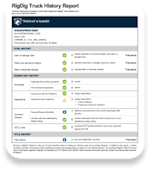
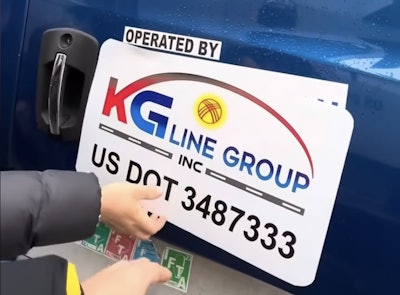
Dale Prax, head of FreightValidate, a vetting platform for carriers and brokers, said that AJ Partners and Sam Express Inc. have been on his radar for almost a year. Prax, in a post on LinkedIn, said his company found Tutash Express, KG Line Group, Sam Express, and AJ Partners were affiliated with other brokers and carriers "through common control, management, ownership, and/or familial relationships."
The "affiliations were not disclosed to FMCSA," he wrote. "That violates Public Law 112-141 § 32103(d)(i)," part of law pertaining to reincarnated (or "chameleon") carriers.
[Related: What we mean when we say 'frieght fraud': Ways to defend against the hydra-headed monster]
Prax said that representatives from that network approached him and denied any mutual affiliations, but he didn't buy it.
"What these geniuses may have forgotten is that about two years ago, they had posted a video showing a potential newcomer traveling to Chicago to purchase a truck with the company," wrote Prax.
That video was posted with a title in the Kyrgyz language. The title roughly translates to "I came to the city of Chicago to buy a new truck in the USA, God willing. We’ll see whether it works out or not.”
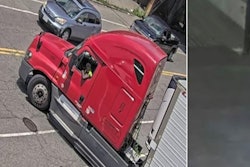
The video shows a man speaking Kyrgyz and buying a new truck, and the seller showing him how to quickly change DOT numbers on the door via magnetic stickers.
"This is exactly how chameleon carriers, authority misuse, and unlawful operations persist," Prax said.
Not only is FMCSA moving on the carriers, but also the school that trained driver Bekzhan Beishekeev, too.
"Our team is also on the ground investigating the driver entry training school — Aydana Inc./U.S. CDL — that helped this UNVETTED, UNQUALIFIED driver get behind the wheel in the first place," wrote Duffy. "If this is in fact a sham school, any other licenses they supported will be called into question."
FMCSA's Training Provider Registry website shows that Adyana, located in Huntingdon Valley, Pennsylvania, has already been issued a notice of proposed removal.
It's unclear if that notice came from FMCSA's first-ever widespread in-person audits of CDL schools that started in December.
[Related: Homeland Security explains how 'illegal aliens' get CDLs in the U.S.]
Pennsylvania, the state that issued Beishekeev's CDL, has frequently sparred with DOT on the issue of non-domiciled CDLs, with DHS formerly accusing the state of licensing a "wanted terrorist" from Uzbekistan.
Pennsylvania maintains that it has always used DHS data to verify the legal presence of CDL applicants.
In fact, all states DOT and DHS have accused of licensing "illegal alien" drivers have pointed to the fact that the federal government grants the applicants work authorization and clears them via a federal database when queried.
In November, DOT threatened Pennsylvania with a $75M penalty over lapses it found in PennDOT's issuance of non-domiciled CDLs.
DOT said at the time it had reviewed 150 non-domiciled CDLs issued by the state and found problems with just eight. That letter gave the state 30 days to come into compliance or risk losing federal funding.
Pennsylvania has since written FMCSA back, saying it's corrected the issues and needs clarification on how to proceed with correcting old non-domiciled CDLs. The state's response also disputed DOT's initial finding of "significant non-compliance."
As ordered by DOT, Pennsylvania said it's reviewed all non-domiciled CDL issuance and found problems with just 2% of some 11,600 issued.
According to communications between PennDOT and DOT, FMCSA has been slow to respond to the state, consistently delaying its ability to renew or issue non-domiciled CDLs.