











More than nine months after U.S. House reps first introduced the Non-Domiciled CDL Integrity Act, now also known as Dalilah’s Law, the Owner-Operator Independent Drivers Association urged Congress to finally hold a vote.
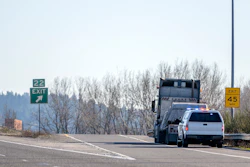
OOIDA’s push comes after an “illegal alien” Haitian truck driver, Michael Bon, crashed and killed Pennsylvania Trooper Michael E. Pahira Jr., who was in his vehicle conducting an inspection when his car was struck.
Dalilah’s Law would codify Department of Transportation rulemaking efforts to almost entirely ban CDLs for non-citizens, aside from a few narrow categories of visa holders.
Since the Pennsylvania crash on I-81, DOT has indicated the driver at fault got his license in Massachusetts during a brief pause between November 2025 and February 2026, when the initial non-domiciled CDL rulemaking effort had been paused by the court.
“I was sued by states like Massachusetts, and if they hadn’t sued me, and a judge hadn’t paused us, this man would never have had a license and Trooper Pahira would have still been alive,” DOT Secretary Sean Duffy recently told Fox News.
In February, a new rulemaking from DOT citing altered justifications (a lack of motor vehicle records for foreign applicants, problems with DMVs processing work authorizations) again blocked states from issuing most non-domiciled CDLs. In May, the rule faced the same challenge that blocked the first attempt in November, but this time courts ruled in DOT’s favor.
The rule remains in effect, but in September it heads back to court for oral arguments.
OOIDA wrote House Speaker Mike Johnson on Wednesday urging Congress to act and take the matter out of the court’s hands.
“This legislation is essential to closing dangerous gaps in the issuance of non-domiciled commercial driver's licenses (CDLs) that continue to put lives at risk on our nation's highways,” OOIDA President Todd Spencer wrote.
Referring to DOT’s rulemaking as a “regulatory fix a future administration could unwind with the stroke of a pen,” Spencer said only “Congress can make these protections permanent.”
Spencer urged lawmaker to "take up and pass Dalilah’s Law. This legislation would codify FMCSA’s Final Rule and help prevent future tragedies such as a recent crash in Pennsylvania that cost a state trooper his life.”
That crash served as major motivation for OOIDA.
“Trooper Pahira’s death is a devastating reminder that our current CDL system lacks the safeguards needed to keep unqualified and unvetted drivers off the road,” Spencer wrote. “Had this legislation been previously signed into law, the driver responsible for Trooper Pahira's death would not have been eligible to receive a CDL in the first place.”
The House Committee on Transportation and Infrastructure approved the legislation by a vote of 35-26 in March.
"We respectfully ask that you bring Dalilah's Law to the floor for a vote without further delay," Spencer concluded. "The safety of America's truckers, law enforcement officers, and the motoring public should not be a partisan issue, and it should not wait any longer."
Dalilah's Law, as amended and passed by the committee, does the following:
- Establishes English Language Proficiency as an out-of-service condition in law (also known as Connor's Law).
- Restricts non-domiciled CDLs to U.S. citizens or green card holders.
- Allows the federal government to dock states up to 12% of highway funding for noncompliance with CDL licensing rules.
- Forces states to be aware of and recognize any time a driver gets disqualified.
- Bans foreign-based dispatch services and the registration of foreign brokers.
- Ends self-certification of CDL training schools and forces them all to recertify within 18 months of the bill's passage.