











Trucking news and briefs for Thursday, Sept. 24, 2026:
- All six involved in the CDL scheme have now pleaded guilty.
- Autonomous trucking activity underway in California.
- Traveling through Teton Pass? Get self-certified.
Louisiana licensing officials plead guilty in bribery scheme
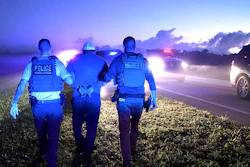
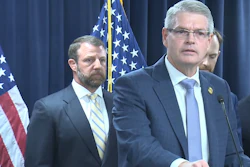
All six defendants involved in a bribery scheme that enabled more than 100 people to fraudulently obtain commercial driver’s licenses have now pleaded guilty, announced U.S. Attorney David I. Courcelle.
Jenay Davis pleaded guilty on Sept. 2 and Christopher Bryan Burns and Shakera Millien pleaded guilty on Sept. 9. The other defendants -- Mahmoud Alhattab, Jonathan Parsons, and Marline Roberts -- pleaded guilty on July 29.
As reported following the first three guilty pleas, Alhattab admitted to being the ringleader of the scheme in which CDL applicants each paid him on average roughly $5,000 to receive unearned CDLs.
In total, from August 2020 through February 2024, Alhattab caused at least 124 people to fraudulently receive CDLs. Of the most recent guilty pleas, over the course of the scheme:
- Millien issued at least 108 CLPs in exchange for payments from Alhattab
- Burns caused at least 18 people to obtain fraudulent CDLs by providing each person with a false skills test entry, and, for some of them, also providing false training entries
- Davis issued at least 14 CLPs in exchange for payments from Alhattab
To bypass the CDL knowledge test, Alhattab bribed Millien and Davis, employees at the Donaldsonville, Louisiana, Office of Motor Vehicles. Alhattab typically sent Millien or Davis a photograph of an applicant’s driver’s license via cell phone, along with any requested endorsements, such as a school bus endorsement. Millien or Davis then completed the applicant’s knowledge test.
After Millien or Davis falsified the test results, Alhattab would bring the applicant to the Donaldsonville OMV office, where Millien or Davis issued a commercial learner’s permit based on the fraudulent scores. Alhattab paid Millien and Davis in cash and provided them with meals at his restaurant.
After passing the knowledge test and obtaining a commercial learner’s permit, most CDL applicants are required to complete entry‑level driver training, which includes demonstrating proficiency in operating a commercial vehicle on public roads.
To bypass the training requirement, Alhattab bribed Parsons and Burns, each of whom operated a truck‑driver training business. Alhattab typically sent Parsons or Burns a photograph of an applicant’s CLP via cell phone, thereby providing the information to create false training records.
Parsons and Burns, in exchange for payments from Alhattab, reported in a federal database that applicants successfully completed training when, in fact, no training occurred.
To defeat the skills test requirement, Alhattab again bribed Parsons and Burns, who, in addition to being trainers, were certified by Louisiana to administer the test.
After an applicant received false skills test scores, Alhattab typically alerted Millien or Davis that the applicant would be returning to the OMV office to obtain the CDL. Because many applicants were not proficient in English, Alhattab sometimes informed Millien and Davis of the language barrier.
In August 2023, Alhattab and Parsons, who had been in the scheme for years, met with Burns at Alhattab’s restaurant to discuss Burns joining. Burns initially agreed to compensation of $400 per fraudulent skills test entry. However, he later complained that the amount was too low, texting Alhattab that this was why Burns “only agreed to 3 or 4 [false skills test entries] per week.” Alhattab then agreed to increase Burns’ payment to $500 per entry and to assign him more skills tests to enter.
To conceal the scheme, Parsons and Burns occasionally rescheduled purported skills tests to avoid the appearance that applicants tested in bad weather.
The six defendants each pleaded guilty to Bribery Concerning Programs Receiving Federal Funds, which is punishable by up to 10 years’ imprisonment, up to three years of supervised release, up to a $250,000 fine, and a $100 mandatory special assessment fee.
Sentencing is set for Oct. 28 for Alhattab, Parsons, and Roberts; Dec. 2 for Davis; and Dec. 9 for Burns and Millien.
[Related: Three guilty in CDLs-for-bribes scheme]
Kodiak begins driver-in autonomous testing in California
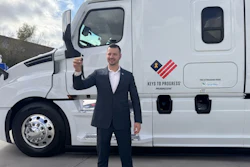
Just more than a month since receiving a permit to test its autonomous trucks in California, Kodiak AI has announced it’s moving loads with its first Golden State customer.
 Kodiak began its autonomous pilot with DTL Transport, a company that specializes in cross-country team runs hauling produce for several of the nation’s largest grocers, on Sept. 22.Kodiak AI
Under a California law passed this year, autonomous developers are required to obtain a permit from the California Department of Motor Vehicles and follow a tiered permitting process, starting with human safety drivers before moving to driverless testing. Heavy-duty trucks are required to complete 500,000 miles before moving to the next phase.
“California’s comprehensive autonomous vehicle regulations are a major unlock for freight innovation in our home state,” said Don Burnette, founder and CEO, Kodiak. “We are pleased to be testing Physical AI in our home state with our permit.”
In its partnership with DTL, Kodiak’s autonomous trucks are hauling time-sensitive, perishable commodities between Fresno and a distribution center in Los Angeles. The route spans approximately 225 miles, mostly on California State Route 99 and Interstate 5.
Results from this pilot work will allow Kodiak and DTL Transport to consider further opportunities in California and beyond, Kodiak said.
“In a constantly evolving freight market, DTL is always looking for ways to leverage new innovations that drive efficiency and value in our operations,” said Lucky Dosanjh, President & CEO, DTL Transport. “Our work with Kodiak helps us understand how embracing this cutting-edge technology improves safety, increases margins, and affirms our leadership position in the industry.”
A human safety driver will remain behind the wheel during the companies’ initial work together.
Kodiak is still planning to launch driverless operations on public highways in Texas by the end of this year.
[Related: 'Driverless' truck waivers: FMCSA hits back at operator's challenge]
Wyoming implements certification process for large vehicles crossing Teton Pass
The Wyoming Department of Transportation is launching a new self-certification program for drivers of certain vehicles who will cross the Teton Pass on Wyoming Highway 22.
The new WY22 SAFE PASS program is aimed at improving driver awareness of the challenges of mountain pass driving. It will officially launch Oct. 1.
The initiative introduces a mandatory self-certification process aimed at educating motorists on the critical safety challenges associated with the steep mountain terrain of Wyoming State Highway 22.
Wyoming 22, Teton Pass, is a highly commuted connection between Wyoming and Idaho, with 10% grades that are twice as steep as average mountain passes, WYDOT said. The program will require drivers who operate recreational vehicles, towing trailers and vehicles that have a gross vehicle weight combination or gross vehicle weight rating of more than 10,000 pounds to complete the program and self-certify their ability to navigate mountain driving. Vehicles over 60,000 pounds are already restricted from the pass.
WYDOT is opening the self-certification process early, beginning Sept. 21, to allow drivers to self-certify in advance of the implementation date of Oct. 1.
“We encourage all drivers who plan to travel Teton Pass to get certified early online, in order to avoid queuing at available pullouts or any delays on their day of travel,” District 3 Engineer Peter Stinchcomb said.
Applicants are able to self-certify online here by entering some basic information and reviewing required safety materials. Once the applicant has completed the process, they will be sent a self-certification letter that will be active for one year. After one year, drivers can reapply for the program.
Once the program is launched, Teton Pass will be restricted to drivers of RVs, drivers towing trailers and drivers who are above the legal weight unless they have completed the program. All other current legal restrictions will still apply, such as the 60,000 pounds weight restriction and any other seasonal closures or restrictions.
Applicants will be required to review educational materials, including documents, maps and videos related to safe driving practices on mountain passes. The materials will include information about navigating steep grades, current legal restrictions, braking protocols, weight and load limitations and vehicle operation.
Drivers who do not comply with the program could be cited for willfully ignoring an official sign, marker, warning, or direction closing or restriction under W.S. 24-1-109.
Drivers who are over the 10,000-pound weight limit and aren’t self-certified, or are in violation of the 60,000 permanent weight restriction, could be cited for willfully violating weight-based road closure under W.S. 24-1-109.