











The recently-formed Federation of Professional Truckers (FOPT) burst into public view recently with the publication of an exemption request that, if granted, would allow its members and others to use paper logs instead of electronic logging devices.
FOPT requested the exemption arguing that paper logs remain enforceable and are understood by enforcement officers nationwide, and that small carriers face disproportionate financial burdens from the ELD requirements.
The Federal Motor Carrier Safety Administration is accepting comments on that request here through March 11.
How did a group that formed just months ago (launching officially in September) get its request through to FMCSA so quickly and open for public input? FOPT CEO Michael Cobb said it started with who they are -- a group “built intentionally as a trucker-based organization,” he said.
FOPT’s board and working group members include owner-operators, carriers, company drivers, a medical professional and a financial professional. All are “people who live in compliance, safety, and day-to-day operations,” Cobb said. “We also carry over 130 years combined experiences in the industry. That matters, because agencies don’t just look at what’s being asked, they look at whether the people asking understand the system they’re trying to engage.”
FOPT narrowed the scope of what it was trying to accomplish with the petition, Cobb said. “We started with a specific, real-world trucking issue drivers and carriers deal with every day. From there, we looked at what authority FMCSA actually has to address it, not what we wish they could do, but what they’re legally allowed to do.”
Cobb said when he first wrote the petition, it was upwards of 15 pages long. “I kind of went, ‘OK, we might want to shrink this down a little bit, because I really don’t know if anybody in the FMCSA is going to take the time to actually read all 15 pages of this.'”
They refocused the effort to be sure to stay within FMCSA’s authority. Cobb maintiains it was important to ensure the request wasn’t “asking to tear the system down,” he said. “The request is optional, limited, and structured so it can be evaluated without disrupting enforcement or safety oversight. Agencies don’t move forward on big, vague ideas. They move forward on contained requests they can actually analyze.”
The exemption-request petition went through FMCSA’s process, where it was determined to be appropriate for public input and published in the Federal Register.
[Related: No HOS violations, no ELD required: New trucking group seeks mandate exemption]
“Publication doesn’t mean approval,” of course, Cobb noted. “It means the request met the minimum legal and procedural standards for public evaluation. From there, the process becomes transparent and participatory, exactly the way it’s designed to work.”
There were several reasons FOPT focused on logs/ELDs with the request -- cost burdens were primary.
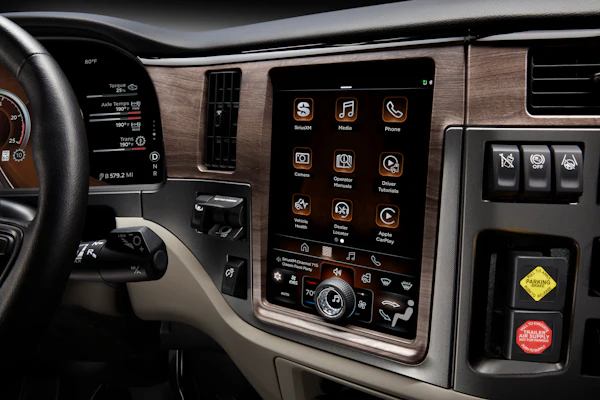
“If you look at the cost of what paper logs are in comparison to what it costs for the ELD,” that cost is “a lot larger than what you’re going to pay for a logbook,” he said.
A paper Driver’s Daily Log book from J.J. Keller, which includes 31 forms, is listed for $6.35 on their website. By contrast, Cobb said he’s spending around $50 a month for his ELD service. With so many different providers available, that cost varies, of course.
Under FOPT’s request, members of the organization and other participants would qualify. If during random audits by participating carriers and/or roadside inspections HOS violations are found, the paper logs users would be excluded from utilizing the exemption.
Young organization, long-term plans
As noted, the organization formed about six months ago. Cobb said it was a little bumpy to start while “trying to figure out all the right players and pieces and fitting them all together.” But Cobb and others got the ball rolling as a group free to join for truck drivers by logging into the website and following the rest of a simple process.
The group has also started to put together some benefits for its membership, including a discount program through T-Mobile.
Cobb's working to establish something of a relief fund for drivers stranded by companies that go bankrupt or other situations that leave drivers far from home without a way to get back. “We’re hoping to have that program up and rolling” by the time of the Mid-America Trucking Show next month, Cobb noted, where FOPT will be set up in Booth No. 40457. The idea would to be able to help those drivers get a bus ticket or other means of transportation to get back home.
The group is also focused on providing resources to members, such as this spreadsheet aimed to help owner-operators know their break-even to be sure they’re running profitably.
[Related: Overdrive's Load Profit Analyzer: How to use to assess rates, costs]
Ultimately, “our goal is to re-engineer this industry and make it better than we found it,” Cobb said of the long-term. “We have seen a lot go on” through the careers of FOPT leadership, and they aim to address those issues.
In addition to the ELD exemption petition, FOPT's filed others that haven't yet seen publication:
- A petition to amend the hours of service regulations to eliminate the 11-hour driving limit with the aim of aligning truckers' work-rest cycles with circadian science.
- One with the Department of Labor to have trucking recognized as a skilled trade.
- Another to FMCSA aims to make detention pay a requirement.
Legislative priorities include getting Congress to authorize sexual predatory offenses as CDL-disqualifying criteria and direct FMCSA to implement and enforce those protections through regulation.
Currently, Cobb said, a CDL ban only happens if the offense occurs inside a commercial motor vehicle.
“The ease at which a person that is designated as a sexually dangerous person, the ease of movement that they would have with a CDL is ridiculous,” Cobb said. “The fact is that they could literally have committed all these crimes, turn around, go get their CDL, go buy a truck … and then the only thing that’s out there is a registry, which just states where they live and where they work.”
Cobb noted the group has a number of other goals, all outlined in this draft legislation -- the Freight Operations Protection & Transparency (FOPT) Act -- published in the group’s blog.
[Related: Truckers are classified as 'unskilled labor'? Nope]