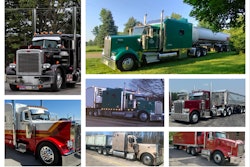











Before finally closing the books on the business, there’s necessary housekeeping, of course. Though it’s not an absolute necessity, for most owner-operators perhaps the biggest piece of it all is liquidating the truck and trailer.
Recent-history journeys of two retiring owners pointed the way forward along paths beset with pitfalls, both beginning by researching their equipment's market value and then listing units for sale in online outlets like Overdrive parent company Fusable's Equipment Experts, posting availability to online groups and the like.
Initial responses can be discouraging, particularly when they don't come at all. Likewise when questions about financing the purchase come from the prospective owner. Such offers to agree to a payment schedule direct to you can be heavy on personal promises, and personal stories about personal setbacks.
If you're truly ready to retire, taking on another owner's risk by financing the truck for them probably isn't your best bet to cut stress and business obligations. Loosely conceived agreements with nothing more than a verbal discussion between seller and buyer don't protect either party. If there’s no bill of sale, and the buyer is making payments to you, that driver’s just renting your truck, effectively, on a promise (and a hope) that he might own the truck later.
[Related: Plenty to consider before entering a lease-purchase agreement with a motor carrier]
You retain the liability of ownership (with its tax implications and everything else). While the driver can deduct his payments as an expense for his own taxes, the owner/seller has a lot to manage besides.
That's not exactly retirement.
Horror stories aren't hard to find, particularly in the realm of private financing deals for small fleets selling equipment to prospective owner-operators in a bid for growth. The biggest mistake those owners make is the willingness to accept payments from a driver without a real loan document, such as a promissory note. It’s a signed promise to pay, in exchange for title to the equipment, “with a lien on the title notarized and filed with the Secretary of State transferring the title to the purchaser,” using common language in definitions of promissory note.
An owner-operator, whether retiring or not, simply can’t afford to try and be the nice guy and just hand the keys to a driver. You have zero control over the operator, and still own the risks if you own the truck, fundamentally.
This is why all parties involved need to seek proper legal advice and contracts before any sale or purchase. It's also why many a retiring owner-operator has leaned on a trusted dealer to consign his equipment for sale, taking a cut of the sale but handling all the logistics for the owner.
A private, for-sale-by-owner-operator transaction is certainly achievable, though, if you take steps to minimize risk or just keep hunting for the right buyer.
[Related: You don't get any do-overs: A word of caution about expanding by leasing on owner-operators]
Ways to minimize risk when selling equipment yourself
The least risky sale situation comes with full ownership with a clean title, no liens. Get ready for the promises and pleading for help in financing after you advertise the equipment for sale -- it can be relentless, and as extreme as an individual offering to purchase for twice the asking price if you're willing to finance.
That’s not a good indication of a potential purchaser’s ability to manage a business overall -- you can probably put the most likely outcome in the failure column.
[Related: Carriers' lease-purchase programs 'meaningful' for at least half of lessee operators]
A buyer with a solid plan is what you're looking for. Overdrive contributor Gary Buchs told the story of selling his fully-paid-for power unit to a couple searching for a way to reduce their fixed costs by replacing a leased truck that had saddled them with a $4,000/month payment.
They wanted lower or no payments.
He called their customers for references, and after four-to-six weeks of negotiation reached an agreement for them to pay down a third of the agreed-to price, keeping several thousand in their emergency savings.
They drafted a loan agreement for 40 weeks of payments, with a lien placed on the title transferred to their name in their state, and properly notarized. In a better cash-flow position, the new owners paid off the 40-week loan agreement in just 12 weeks, and he provided the documentation for just where they could remove the lien from the title filed with their Secretary of State’s office.
It sounds simple put this way, but becoming a truck owner can be a much simpler, easier task than selling off personal inventory. There are so many different emotional decisions to be made that could interfere with accepting that final step away from the truck, or the business as a whole.
Private-sale pitfalls: A few final considerations
Whether you’re shutting down the business for good or in the market to buy, internet listings stir up reactions and judgment, even when you're not currently looking to make a purchase or conduct a private sale. Personal bias is a powerful influence, as friends and mentors broadcast opinions all with the best of intentions.
Every seller, and every buyer, should embrace some sense of reality to avoid costly missteps.
Key point: Private purchases may not be the deal you think they are. There are some very real differences when managing a for-sale-by-owner transaction as opposed to a dealer transaction. There’s a widespread belief that you can save significant money buying privately, avoiding the margins dealers and salesmen must maintain to cover expenses accrued being a dealership. Yet that’s not always the case.
You still have to do the necessary homework.
As purchasers, our natural tendency is to lean toward optimism -- if it wasn't, why would we ever want to take a seat at the table and ante up to begin the negotiating phase? Where the bidding goes from there will vary greatly person-to-person. Optimistic about the prospects for freight? That will carry a lot of weight for a purchaser, highly variable in intensity depending not only on freight-market realities but the buyer's political leanings.
Doing the necessary homework around market value will help. It's crucial for buyers and sellers both to get the best sense of pricing reality as possible -- dig out current sale prices, in this case for equipment.
Overdrive sister company Price Digests' tracking of used-market value is one source. (A single vehicle valuation look-up there is available for less than $40. It could also help you determine the valuation needed for comprehensive/physical damage insurance coverages.)
Additional resources:
- For sellers and/or buyers, Act Research’s “State of the Industry: U.S. Used Trucks Classes 3-8” reports offer broad overviews of used-truck volume/pricing trends
- For buyers, Overdrive’s own RigDig Truck History Reports offer a truck’s title history and much more detail.
Read next: Owner-op resources: State and other trucking associations, agencies, business information, more