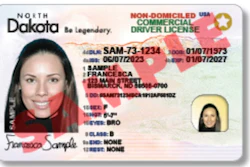












After the Federal Motor Carrier Safety Administration almost completely banned non-domiciled CDLs, states are putting forth their own restrictions to ensure compliance with new federal regulations and in some cases implement even stricter requirements.
As reported earlier this month, the Indiana Bureau of Motor Vehicles acted quickly on a law passed by the state’s legislature and revoked "nearly all" non-domiciled CDLs issued in the state, which resulted in some 1,790 drivers having their license revoked on April 1.
Another state took a similar approach to non-domiciled CDLs and passed a law last month that shuts down the state’s non-domiciled CDL program.
In Idaho, HB 667 was signed into law by Gov. Brad Little and takes effect July 1.
The new law removes provisions related to non-domiciled CDLs and commercial learner’s permits, meaning that anyone looking to obtain a CDL in Idaho must be a resident of the state. Idaho will no longer accept applications for non-domiciled CDLs, whether from foreign-domiciled individuals or from residents of other states that lose CDL issuance privileges.
A “statement of purpose” accompanying the bill said the legislation would “protect the state of Idaho from issuing commercial drivers licenses to individuals coming from foreign countries or other states with learner's permits. The learner's permits will not be honored. Idaho's CDLs will be issued to those who finish the entire process in Idaho.”
[Related: State Department resumes issuing visas for commercial truck drivers as non-domiciled CDLs return]
A bill passed this week in Tennessee and sent to Gov. Bill Lee's desk makes it a Class A misdemeanor for a direct employer to knowingly employ and allow a person unlawfully present in the U.S. to operate a commercial motor vehicle in the state. For purposes of the bill, the term "direct employer":
- Means the person or entity that hires, compensates, and exercises direct supervisory control over an individual operating a commercial motor vehicle
- Does not include customers, shippers, consignees, brokers, or entities that contract for transportation services but do not directly employ the individual operating a commercial motor vehicle.
Additionally, an employer who knowingly employs and allows a person unlawfully present in the U.S. to operate a CMV, and any official or employee of any state who "recklessly" issues a CDL to such a person, would be held liable to any person who suffers personal injury or property damage caused by the unlawfully present person's operation of a CMV. An injured person would be entitled to recover:
- Compensatory damages, including, but not limited to, noneconomic damages
- Punitive damages, if appropriate
- Court costs and reasonable attorney's fees
[Related: Tennessee needs citizenship/lawful stay documents for thousands of CDL holders]
In Arizona, an amended version of a bill introduced earlier this year passed the state’s Senate and is now working its way through the House.
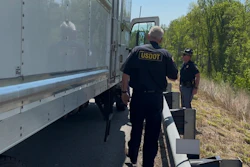
SB 1511 would require any non-domiciled CDL holder operating in Arizona to provide evidence of their lawful immigration status or lawful presence in the United States. Law enforcement would be given authority to request such evidence at roadside. Failure by the driver to produce such evidence would result in a required civil penalty and citation from law enforcement.
Additionally, the law enforcement officer would have the option to place the driver out-of-service and report the OOS order to the jurisdiction that issued the person’s CDL, the FMCSA, and the motor carrier that “exercised operational control of the commercial motor vehicle at the time of the stop,” the bill states.
The motor carrier then would be required to arrange, within 24 hours of notification of the OOS order, either a replacement driver, or removal of the truck from the roadway by the motor carrier or truck owner. If the truck is not removed within 24 hours, law enforcement could impound the vehicle for up to 30 days.
If the truck is hauling cargo at the time of the impoundment, the bill includes a carve-out that requires the law enforcement agency to alert the cargo owner and allow for the cargo to be recovered at no charge to the cargo owner.
[Related: DOT pulls $74M from New York over non-domiciled CDL issues]
Finally, a bill in Missouri looks to take on both English language proficiency and non-domiciled CDL issues in the state.
For ELP, HB 2741 creates the offense of operating a commercial motor vehicle without sufficient English language proficiency. A first offense results in a Class D misdemeanor, a Class B misdemeanor for a second offense, and a Class D felony for a third offense.
Any offense would result in the driver not being allowed to operate a commercial vehicle in Missouri until they can demonstrate English proficiency. Drivers would also be fined $1,000, while motor carriers whose driver is found to be operating without ELP would be fined $3,000. The vehicle would be held until the $3,000 fine is paid.
Additionally, the bill requires a person holding a non-domiciled CDL or CLP to possess a valid work visa or provide proof of U.S. citizenship to validate his or her identity while operating a commercial vehicle.
Proof of citizenship for non-domiciled CDL holders from states that, in rare cases, lose their authority to grant CDLs, must be demonstrated through presentation of a birth certificate, naturalization certificate, or valid passport. Drivers found to be violating the provision would be guilty of a Class B misdemeanor and fined up to $1,000, jailed for up to 90 days, or both. Again, carriers employing such a driver would be fined $3,000.
[Related: Indiana revokes 'nearly all' non-domiciled CDLs following new state law]