










Trucking news and briefs for Tuesday, April 28, 2026:
- Do you employ truck drivers in your small fleet? You may have to verify your ID in FMCSA’s drug, alcohol database after new steps to combat scammers gaining acccess to the Clearinghouse.
- Truck driver busted smuggling border crossers.
- Should fleets be allowed to use pulsating brake lights?
- “I would never just call 911 and keep going.” --Highway Angel Steve Miller
FMCSA adds ID verification requirement for employers to Clearinghouse
The Federal Motor Carrier Safety Administration (FMCSA) on Monday announced improvements to its Drug and Alcohol Clearinghouse online database.
New identity verification requirements for certain Clearinghouse users, including employers, will strengthen fraud prevention, improve record accuracy, and enhance accountability for over six million users in the database, the agency said.
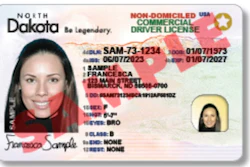
The move follows early-year warnings from the agency about scammers convincing CDL holders to "share their commercial driver’s license (CDL) number, date of birth, and first and last names," according to this January-posted notice in the Clearinghouse. "This may be under the guise of a Substance Abuse Professional (SAP) resolving open violations, or an employer willing to report a negative result for the return-to-duty (RTD) test or the SAP-prescribed follow-up tests."
A small fleet owner Overdrive spoke to in March reported his driver experiencing a variant on the scenarios, with a refusal-to-test violation appearing on the driver's record as if reported by an employer, putting the operator in prohibited-from-driving status.
Cold calls then came in offering to clear the record for payment, to which the driver agreed; the "refusal to test" vanished; and, sensing he was being scammed, the driver declined to pay for the "service."
FMCSA in January warned operators not to fall for these scams. "Once the scammer has the driver’s CDL or CLP information, they use the information to first enter information to improve the driver’s Clearinghouse record for payment, only to later demand more payment with the threat of entering fraudulent drug and alcohol program violations on the driver’s record."
In the small fleet owner's driver's case, though not exactly like the scenario FMCSA described, the scammers followed through on threats after the driver didn't pay them, entering fraudulent test information that then took weeks to sort out.
The new ID-verification steps for Clearinghouse users will help prevent fraudulent access to the system, FMCSA hopes.
“Safety is non-negotiable at FMCSA, and that means ensuring the systems we rely on are secure, accurate and trustworthy,” said agency Administrator Derek Barrs. “By strengthening identity verification, we are closing gaps that could be exploited by bad actors, protecting the integrity of the data, and reinforcing confidence across the entire commercial driver safety industry.”
[Related: Trucker locked in FMCSA's Drug and Alcohol 'Clearinghouse jail' fights to break out]
Under new requirements, medical review officers (MROs), substance abuse professionals (SAPs), third-party administrators, and employers will be required to take additional steps to verify their identities within the FMCSA database.
The new process will be completed using Idemia, a company specializing in secure identity verification also previously for verification of identities in FMCSA's soon-to-roll-out new registration system for motor carriers and others. Idemia is contracted and used by the Department of Homeland Security at airports across the country, too. Future phases will extend the new requirements to most other users, though CDL holders are already verified through state systems.
[Related: FMCSA says fighting fraud will improve safety, with first look at new registration system]
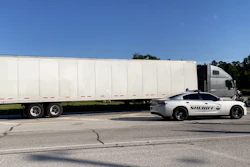
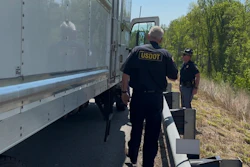
Truck driver caught smuggling 22 border crossers in Texas
U.S. Border Patrol agents in Laredo, Texas, along with the Laredo Police Department, recently stopped a human smuggler on I-35 and discovered 22 illegal aliens packed inside a truck cab.
According to a Facebook post, of the 22 individuals being smuggled, 19 were adults from Mexico, one was from Guatemala, and there were two unaccompanied minors from Mexico.
The truck’s driver, a U.S. citizen, is facing charges of alien smuggling, Border Patrol said.
[Related: Texas driver caught smuggling 23 people in sleeper]
Lighting manufacturer requests exemption for flashing brake lights
The Intellistop manufacturer of a brake-light module that pulses the required rear clearance, identification, and brake lamps upon brake activation has requested a five-year exemption that would allow fleets to install the module.
Section 393.25(e) of the Federal Motor Carrier Safety Regulations requires that all exterior lamps be steady burning, with certain exceptions. Intellistop has applied for an exemption from that requirement to allow motor carriers to operate trucks equipped with its lamp module.
With the module, when the brakes are applied, it’s designed to pulse the rear clearance, identification, and brake lamps from a lower-level lighting intensity to a higher-level lighting intensity four times in two seconds and then to maintain the OEM’s level of illumination for those lamps until the brakes are released and reapplied.
Intellistop asserted that its module is designed to ensure that if the module ever fails, the clearance, identification, and brake lamps will default to normal OEM function and illumination.
Intellistop requests that the exemption be granted to all motor carriers subject to FMCSA's jurisdiction. FMCSA has previously granted waivers to specific fleets that have requested to use the Intellistop modules in their fleets.
FMCSA will accept public comments on the request here through May 28.
Trucker honored for helping at scene of bus crash
Scott Miller, a truck driver for America’s Service Line, has been recognized as a Highway Angel by the Truckload Carriers Association for his actions following a bus crash in Green Bay, Wisconsin.
 Scott Miller
“Wow, this bus comes flying across the highway ... hit the curb, jumped in the air ... and then went about 125 more yards,” Miller said. “It could have been so much worse.”
The crash left at least 41 people injured, including two in critical condition, and required a large-scale emergency response with assistance from multiple jurisdictions. Miller, who said he narrowly avoided being struck himself, immediately sprang into action.
“If I’d been five seconds further down the road, it would have probably killed me,” he said.
After calling 911, Miller relied on his 32 years of professional driving to assess the situation before approaching the bus. Once at the scene, he discovered passengers trapped and injured inside the bus, including Audrey Pierce, who was wedged in the stairwell near the door.
“He stayed on the scene until the police and paramedics arrived,” Pierce said. “He held my hand and talked to me while I was trapped. He kept me awake and talking.”
Miller remained on scene for approximately 90 minutes, helping direct emergency vehicles, assisting passengers, and supporting first responders as they worked to treat the injured. Many of the passengers were elderly, which made the experience even more emotional.
“They’re basically like your grandma and grandpa,” Miller said. “It really pulls your heartstrings.”
Authorities continue to investigate the cause of the crash, including potential mechanical failures. Law enforcement has also charged the driver in connection with the incident. Despite the chaos and severity of the crash, Miller remains humble about his actions.
“I would never just call 911 and keep going,” he said. “We’re all here to help one another.”