










Trucking news and briefs for Thursday, Sept. 3, 2026:
- Immigration arrests, ELP violations, fatality reductions: Alabama's boost in enforcement.
- More truck parking info now available along I-40.
- Navigation data-based insurance pricing?
- House committee advances bill that aims to cut diesel emissions from trucks.
Alabama governor touts state efforts to keep 'illegal and unqualified' drivers out of trucking
Alabama Gov. Kay Ivey on Wednesday touted the state’s efforts in aligning with the Trump administration’s efforts to combat fraud and illegal activity in trucking.
Cracking down on bad actors in the industry has been a priority for Ivey, the governor’s office said. Through aggressive state enforcement, strong licensing standards and a close partnership with federal immigration authorities, Ivey said the state “is already delivering strong results and helping set the national standard for keeping illegal and unqualified commercial drivers off the road.”
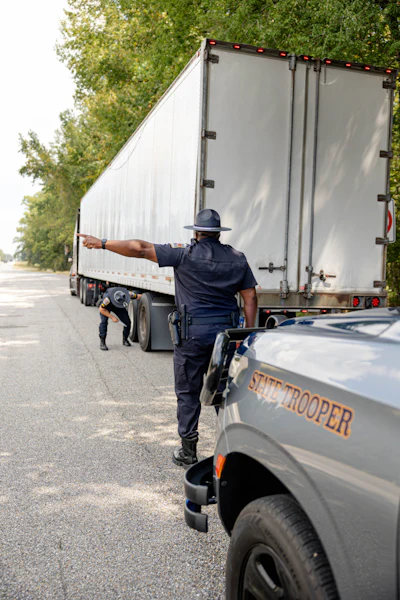
Ivey added that the Yellowhammer State “has been at the forefront of these same efforts” with the Alabama Law Enforcement Agency’s (ALEA) Motor Carrier Safety Unit (MCSU).
Since the partnership between ALEA and ICE began Oct. 27, 2025, ICE personnel have joined ALEA’s routine commercial-vehicle enforcement assignments when available. During that time, ALEA’s MCSU assisted ICE with the detention of 561 individuals for immigration violations encountered during commercial motor vehicle enforcement activities.
Additionally, since Jan. 1, 2025, MCSU troopers have issued 1,022 English language proficiency violations to commercial drivers, Ivey noted. The vast majority of those violations have been of the OOS variety, according Overdrive analysis of sister data company RigDig's accounting.
Prior to President Trump's executive order returning ELP violations to the OOS criteria and implementation in June 2025, Alabama issued just 47 violations to drivers for lacking ELP the first half of the year. Hundreds followed in the latter half.
In March, Ivey signed the Highway Safety and Fairness Act. The law requires foreign CDL holders operating in Alabama to possess valid United States work authorization, requires all CDL holders to demonstrate ELP and makes presenting a fraudulent foreign CDL during an enforcement encounter a criminal offense. The law takes effect in less than a month on Oct. 1.
“Alabama did not wait for this issue to resolve itself,” Ivey added. “We took action, we strengthened the law and took illegal operators off our highways. My message is clear: If you are here illegally, operating unlawfully or putting American lives at risk, you will be held accountable.”
Alabama does not issue non-domiciled CDLs to non-citizens and only issues CDL licenses to lawful permanent residents.
Ivey attributed a reduction in fatal crashes involving commercial motor vehicles in the state to aggressive enforcement. In 2025, Alabama recorded 106 fatalities involving CMVs, the lowest annual total since 2021. So far in 2026, the state is experiencing a 24% reduction in CMV-involved fatalities compared to the same period last year.
“President Trump and Secretary Duffy are taking decisive action to restore law, order and accountability to America’s trucking industry, and we are proud to help lead that effort,” said Ivey.
[Related: Democrat-appointed judges in the majority ruling on FMCSA's non-domiciled CDL ban]
Tennessee piloting parking availability system along I-40
The Tennessee Department of Transportation (TDOT) has implemented Truck Parking Availability System (TPAS) pilot technologies at its I-40 Welcome Center in Smith County. The state announced the pilot earlier this year.
The pilot project is designed to help truck drivers find safe, reliable parking when moving essential freight across the Southeast, TDOT said.
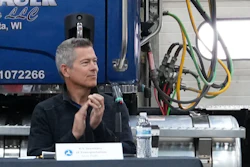
 The TPAS technologies are now fully integrated into TDOT’s SmartWay system and operational at the I-40 Welcome Center.Tennessee DOT
Using QR codes on signage in the truck parking area, truck drivers are encouraged to submit feedback on the technologies to help TDOT determine the most reliable occupancy detection technology and overall systems standards.
The technologies will be evaluated over the coming months to determine the recommended technologies and standards for future statewide scaling across all truck parking facilities.
Four different methods of monitoring tech are deployed:
- Magnetometers to detect the number of trucks entering and exiting the Welcome Center’s eastbound lot.
- Radar-Camera Fusion Sensor to detect the number of trucks entering and exiting the Welcome Center’s eastbound lot, and to detect the number of available parking spaces in the Welcome Center’s westbound lot.
- Light Detection and Ranging (LiDAR) to detect the number of available parking spaces in the Welcome Center’s westbound lot.
- Closed-Circuit Television (CCTV) cameras to detect the number of available parking spaces in the Welcome Center’s westbound lot.
TDOT said these provide real-time availability information to truck drivers through roadside signage and in-cab alerts via ELDs. Similar to TDOT SmartWay cameras, any camera deployed at the I-40 Welcome Center to monitor parking will not be recorded or used for enforcement purposes, the department added.
“By giving drivers early, reliable information through these innovative solutions, we help them make smarter decisions,” said TDOT Commissioner Will Reid. “Our goal is simple: to support the men and women who keep our freight moving, while protecting everyone who uses Tennessee roadways.”
The new tech doesn’t increase actual truck parking capacity in the Volunteer State, but it may help truck drivers find available spots in a state ranked by Overdrive readers in 2025 as one of the worst in the country for truck parking in the 2025 Truckers’ Highway Report Card. Tennessee received a dishonorable mention from truckers in that report.
[Related: Truckers still torn: Truck Parking Club's huge growth with pay-to-park]
Trucker Path, Corgi launch insurance program based on navigation data
Trucker Path Insurance, launched nearly a year ago, announced a partnership with Corgi Insurance for what the companies say is the industry’s first insurance program to use commercial vehicle navigation and route adherence data in the underwriting process.
Available to Trucker Path app users with fleets of fewer than 10 trucks, the program gives Corgi a new way to measure each fleet’s risk to offer rates that more accurately reflect how they operate.
While not exactly usage-based insurance, where premiums adjust depending on use and exposure metrics like miles or hours run, the program shares some characteristics with its data-access characteristics.
Trucker Path Insurance VP of product and technology Adam Smith said that “for the first time, an insurance carrier is incorporating commercial vehicle navigation data in underwriting decisions. Traditional underwriting largely looks backward at historical losses. Navigation data adds a forward-looking view by showing whether fleets plan efficient, truck-safe routes and whether drivers follow them. That helps insurers better identify and price the behaviors that can prevent claims.”
[Related: ELD-data engagement: Your insurance premiums could depend on it]
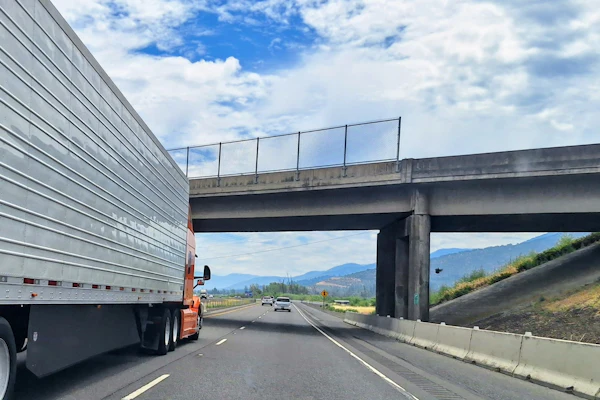
Smith added that “truck-specific navigation can reduce exposure to claim-causing events by routing commercial vehicles around weight-restricted roads, unsuitable residential areas and low-clearance bridges, while also helping fleets manage theft exposure by avoiding known high-risk areas.”
The program brings Corgi Insurance’s auto liability, cargo, and physical damage coverage to Trucker Path’s community of app users. As the agency of record, Trucker Path Insurance will connect eligible trucking companies with Corgi’s insurance solutions.
“Together, we are introducing a new category of underwriting data that can distinguish the risk of one fleet from another,” said Drew Bregman, head of strategy at Corgi. “Better measurement can support rates that are more appropriate for each fleet and encourage the routing decisions that reduce risk for drivers, cargo, equipment, other motorists, and the communities they travel through.”
[Related: Head off the insurance-renewal shocker: Mind open reserves, shop coverage early]
House advances bill to reauthorize Diesel Emissions Reduction Act
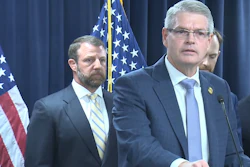
The House Committee on Energy and Commerce this week unanimously approved the reauthorization of the Diesel Emissions Reduction Act, advancing a program aimed at cutting emissions from heavy-duty vehicles.
The legislation, introduced by Reps. Doris Matsui (D-California), Ken Calvert (R-California), Chellie Pingree (D-Maine), and Nick Langworthy (R-New York), would extend the DERA program through fiscal year 2029 at $100 million annually. The measure now heads to the full House of Representatives for consideration. Similar legislation passed the U.S. Senate in 2024 but did not advance in the House.
Established nearly two decades ago, DERA provides federal grants and rebates to help finance the voluntary replacement or retrofit of older heavy-duty diesel vehicles and engines. The program is credited with saving more than half a billion gallons of fuel since its inception.
While private entities cannot apply for DERA funding directly through the EPA, the agency encourages private fleet owners to partner with eligible entities, including regional, state and local agencies; port authorities; and more, who can receive DERA funds for their own diesel emissions reduction programs.
DERA has funded projects in diverse sectors and project locations, but in its 2022 report to Congress, the EPA noted that the largest number of upgrades (43%) went to school buses from 2008 to 2018. Freight sector projects, at 36%, are comprised of various vehicles, including more than 17,000 long-haul combination truck upgrades. Construction, port, municipal, other (industrial, mining, rail yard, and stationary), agriculture, airport, and transit account for the remaining 21% of funded sector upgrades.