










Trucking news and briefs for Tuesday, Sept. 15, 2026:
- Unannounced hazmat blitz sidelines nearly 700 trucks.
- CARB finalizes rollback of “zero-emission” truck mandate.
- More HOS wildfire relief.
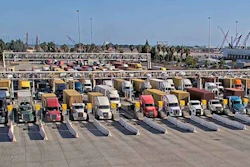
Inspectors issued nearly 700 OOS viols in unannounced hazmat blitz
A five-day hazardous materials/dangerous goods (HM/DG) inspection blitz earlier this summer resulted in a 13.5% vehicle out-of-service rate in the U.S. and Canada.
During the Commercial Vehicle Safety Alliance’s unannounced HM/DG inspection and compliance enforcement initiative, which took place June 8-12, inspectors affixed 1,187 CVSA decals to 794 power units and 393 trailers for having no critical vehicle or specification cargo tank violations.
On the other hand, out of 4,122 total HM inspections conducted in the U.S., 500 vehicles (12.1%) were placed out of service. And out of the 924 total DG inspections completed in Canada, 183 of those vehicles (19.8%) were OOS. The total number OOS hit 683, a 13.5% total out-of-service rate.
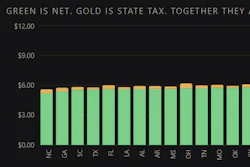
On an annual basis Overdrive and sister Fusable company RigDig's CSA's Data Trail analysis shows the following top 10 contiguous U.S. states as most intense for hazmat-category violations, generally rare compared to other categories. Among states with highest hazmat percentages of their total viols, just Ohio cracks the 2% mark at the very top.
- Ohio, with more than 2% hazmat violations in 2025
- Oklahoma
- North Dakota
- Missouri
- Nebraska
- Oregon
- Minnesota
- South Carolina
- Vermont
- Montana
The biggest offender for OOS violations during the blitz was yet another category -- cargo securement. Inspectors identified 128 OOS cargo securement violations that could result in the cargo/goods/materials moving in a manner that would cause damage to the package resulting in leaking, spilling, etc.
Another big violation category that led to OOS violations was label, placarding and marking violations, which involve failing to accurately communicate hazards under the U.S. Hazardous Materials (HM) regulations and Canada’s Transportation of Dangerous Goods (TDG) regulations. There were 197 total placard violations, 55 of which were of the OOS variety. Inspectors also found 64 total marking violations, 20 of which were OOS. There were also 32 label violations identified.
Inspectors also identified 29 OOS HM/DG package integrity (leaking) violations. Leaking hazardous materials/dangerous goods pose a significant threat to human health and safety, property, and the environment, CVSA said.
Inspectors in the U.S. also recorded 73 emergency response information violations. Emergency response information details the specific actions and information needed to address a hazmat release, including containment and mitigation. Documentation is mandated for specific hazardous materials and quantities.
Other violations issued during the weeklong effort:
- 265 shipping paper violations, of which 57 (21.5%) were out-of-service violations
- 47 HM registration violations
- 8 HM safety permit violations
- 16 HM endorsement violations
Full results to CVSA’s unannounced HM/DG enforcement effort can be found here.
[Related: Brake inspections incoming: Where troopers will focus annual blitz]
California formally repeals 'zero-emission' truck mandates
California officially finalized the repeal of its zero-emission truck-purchase mandates targeting heavy-duty commercial fleets.
The California Air Resources Board (CARB) rolled back its High Priority and Drayage Fleet requirements under the Advanced Clean Fleets (ACF) rule, effective Sept. 10, following formal approval from California's Office of Administrative Law (OAL).
The move follows a years-long legal battle led by the California Trucking Association, which challenged the state's aggressive timeline requiring commercial fleets to transition to zero-emission heavy-duty trucks.
CTA secured an advisory letter in late December 2023 in which CARB agreed to withhold enforcement of the fleet rules pending approval of a federal Clean Air Act waiver request by the U.S. Environmental Protection Agency. By April 25, 2025, negotiations between CTA and CARB produced an agreement to repeal the provisions.
With the OAL’s formal approval now in place, CTA said it is coordinating with legal counsel on final steps to formally settle the ongoing litigation. The association characterized the outcome as a major victory for its members and commercial operators across the state. --Jason Cannon, CCJ
[Related: Truckers to EPA: Send CARB 'back to the drawing board' for ZEV truck-purchase mandates]
FMCSA extends wildfire HOS relief on the Plains
Haulers providing direct assistance to the ongoing wildfire emergency in Nebraska have been granted another month of hours-of-service relief.
The Federal Motor Carrier Safety Administration granted a request from state officials to extend the relief through Oct. 11 due to ongoing emergency conditions. The emergency declaration has been in place since it was first issued by Nebraska Gov. Jim Pillen in March.
Under terms of the waiver, motor carriers and drivers providing direct assistance to the emergency in the State of Nebraska are granted emergency relief from 49 CFR 395.3, maximum driving time for property-carrying vehicles. The relief applies regardless of the origin of the trip, so long as the carrier or driver is providing direct assistance to the emergency in Nebraska.
The waiver is in effect until the end of the emergency, or through Oct. 11, whichever is sooner.