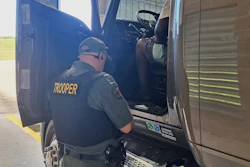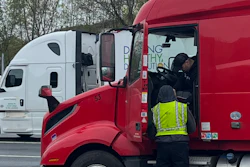












Starting this coming Sunday, Aug. 23, the annual Brake Safety Week inspection blitz and outreach initiative of the Commercial Vehicle Safety Alliance will see inspectors across the nation fan out to scales and the roadside with a particular focus this year on brake drums and air-disc systems' rotors.
In the video up top, Lt. Christopher Brooks of the Tennessee Highway Patrol lays out seemingly simple ways any truck owner might prep for a big inspection event -- and, really, the simple chance of an inspection anytime through the year. A good bit of it you're doing day-in, day-out, with thorough pre-trips that ought to reduce the likelihood of violation.
Want to avoid the inspection to begin with?
Lt. Brooks offers some intel there, too, with explanation of just how sorting happens at places like Tennessee's big Giles County facility on NB I-65, with nearly a mile's worth of distance for pre-screen techs to work before the pull-in to weigh and inspect -- or bypass around the backside of the building.
Pre-screening techs can help you if:
- Brakes/tires are in order, not registering excessive heat with the scale's infrared scanners.
- Your/your motor carrier's CSA Safety Measurement System record shows as positive a picture as possible.
- You've been inspected recently and passed with flying colors.
Historically the big Brake Safety Week event's not seen nearly the "all hands on deck" approach Lt. Brooks flags about the spring Roadcheck initiative. (Overdrive research has backed that up, to an extent. Owner-operators in recent years reported about twice the likelihood of being inspected during Roadcheck compared to the summer brakes blitz).
Nonetheless, expect extra attention this year to brake drums and rotors in brakes inspections.
[Related: Roadcheck 2026: Toughest states for HOS violations]
Some good news in the data
In the full mix of brakes violations, out-of-service orders and violations in general for inoperative or defective brakes as a result of core drum and rotor issues have been relatively uncommon so far this year, even in states most intensely focused on brakes.
Considered nationally, at the same time, brakes violations have only gotten more prominent in the overall mix at roadside and scalehouses in recent years.
Since Overdrive and our RigDig sister data company last updated the CSA's Data Trail rankings for brakes violations ahead of 2025's blitz, New Mexico (No. 3), Virginia (6) and Missouri (9) have climbed the rankings into the top 10 toughest brakes states, shown in the table below.
None of those states are recording huge numbers of drum/rotor-related violations in the overall mix of brakes infractions.
There's one reason for that suggested by CVSA's inspections programs director, Kerri Wirachowsky: it's a fairly simple matter for drivers to ID drum/rotor problems with just a visual check. (The bad news: Correcting any problem spotted won't be the cheapest fix in the world, more than likely.)
"Visible portions of drums and rotors can be examined through the wheel openings," Wirachowsky emphasized, and by "looking underneath the vehicle during their walkaround pre-trip inspection."
In a recent Brake Safety Week tip sheet, CVSA highlighted several issues, all OOS violations in this case, with visuals that can help show the kinds of things you're looking for.
 Download the full flyer via this link. CVSA
CVSA urged operators to check closely for:
- Signs of cracked or broken pieces in the friction surface of the rotor in disc-brake systems.
- Cracks that run through to the outer portion of the drum or any missing pieces, where visible.
- Rotors' overall condition -- heavily rusted rotors across the entire friction surface indicate an inoperative brake.
- Grooved rotors, indicating metal-to-metal contact -- if seen, the brake pads are worn and the shoe is making contact with the rotor.
Make certain, finally, CVSA noted, that rotors are not worn to the extent that center vents are exposed.
[Related: Truckers' DataQs to-do: Timely, thorough filings for the win]
Why drum/rotors are in focus this year, and more resources
Wirachwosky emphasized the hazards associated with letting drum and rotor issues go uncorrected too long, particularly "broken drums and rotors that can become dislodged brake components," she said. "A broken drum or rotor can significantly affect the braking efficiency of the vehicle, but can also create an imminent hazard if a portion becomes dislodged and is propelled from the vehicle."
A broken drum might cause the brake shoes "to catch on the drum upon application," she added, "potentially resulting in further damage or the shoes and/or other brake components dislodging from the vehicle."
For 2024 and 2025, Brake Safety Week's focus area was on linings and pads. The shift toward drums and rotors sought to emphasize operators' own inspections, that general visual ease Wirachwosky mentioned.
Yet there was another reason for the shift, too. In January 2025, brake manufacturers who work with CVSA's Operation Air Brake resource and enforcement program adopted a new requirement that significantly reduced the copper content in brake pads/linings, Wirachowsky said. Manufacturers "were interested in determining what, if any, impact the reduction in copper content would have on the wear and condition of brake drums and rotors."
CVSA will utilize inspection data from this year's Brake Safety Week to help "monitor and study the condition of drums and rotors," Wirachowsky said, maintaining the drums/rotors focus next year for two-year evaluation "to determine whether the reduction in copper content resulted in any change or increase in drum and rotor violations."
Additional detail is being flagged in violation data about whether the "component was broken, cracked, excessively rusted, or damaged as a result of metal-to-metal contact," she said, to "provide a better understanding of any trends that may have emerged."
What do you say? If you've purchased a truck with brakes manufactured last year or this year, have you noticed a change in wear or function?
More brakes- and inspections-related resources:
- The toughest states for moving violations
- How troopers tackle remote ELD manipulation, 'chameleon' operations
- Coal truckers targeted: Toughest states for vehicle violations
- Toughest states for HOS violations
- Overlooked maintenance: Owner-ops stress tools for prevention
- One-day blitz parks 500+ trucks: Toughest states for brakes violations
- More ways to avoid brake violations ahead of Brake Safety Week
- Stay ahead of the inspectors with maintenance topics in Overdrive
- How brake-adjustment alone can put you out of service -- the '20% rule'
- Ways to avoid inspection, without bypassing the scales
- 'Inspections should be preventive, not punitive'
- CVSA out-of-service criteria updates for 2026, 2025, 2024 and 2023
- Invest in inspections now to save money, hassle later
- Inspections, violations, safety scores: Following rules of the road, and how they follow you
- More ways owner-ops can avoid -- or ace -- inspections
- Where inspection is most likely, state by state, following Roadcheck 2023
- The toughest 10 states for load securement violations
- Five most common reasons wheel seals fail
- Find more in Overdrive's long-running CSA's Data Trail series via this page