










Trucking news & briefs for Monday, Aug. 10, 2026:
- The government brought the sec-discrimination case against KLLM in federal court in Texas.
- New safety chief at FMCSA brings trucking, highway patrol experience.
- Officials in Western Canada are alerting truckers to a fraudulent-purchase scheme targeting suppliers.
EEOC's case against KLLM for sex discrimination in female driver training protocol
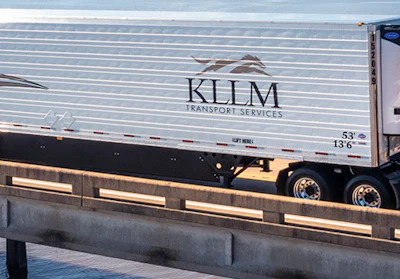
The Equal Employment Opportunity Commission announced a lawsuit alleging sex discrimination against female drivers at fleet KLLM Transport Services and its KLLM Driving Academy Subsidiary.
The EEOC alleges KLLM's training conditions were discrimiatory on the basis of sex "since at least January 2021," according to EEOC's announcement of the suit. Allegations in the EEOC complaint were filed in federal court for the Northern District of Texas, Dallas Division:
- KLLM adopted male trainers' decisions to "opt out of training female students" instead of making provisions for single-sex sleeping quarters for female drivers during that training.
- The practice "forced women drivers to wait longer to start their training," according to the EEOC.
- KLLM "refused to pay female student drivers who opted to receive instruction from female trainers while they waited for a female trainer to be available," EEOC said, while paying all other actively engaged student drivers.
- KLLM mandated female student drivers who were willing to receive driving instruction from a male trainer to notify their spouses or partners as a precondition to start training, according to EEOC’s complaint.
The lawsuit followed attempts to reach a pre-litigation settlement through the EEOC's administrative conciliation process, according to the commission.
KLLM, contacted for comment by Overdrive, did not respond in time for publication.
“Rather than provide the female student driver’s single-sex sleeping quarters that protected their privacy and ensured equal employment opportunity, the employer here instead decided to adopt a series of sex-based discriminatory policies that treated women trainees worse than male trainees and disadvantaged them in their employment opportunities, which is unlawful disparate treatment,” said acting EEOC General Counsel Catherine Eschbach.
The conduct is alleged to violate Title VII of the Civil Rights Act of 1964, prohibits sex discrimination in employment.
The case shares some similarity to one settled by Prime, Inc., in 2016 with $3M worth in penalties and back wages going to 60-some driver-trainees over Prime's past same-sex trainer-trainee policy.
Prime at the time argued the policy did not violate federal anti-discrimination laws and was well received by trucking as an effort to prevent male trainers from sexually harassing female truck operators/trainees.
[Related: Prime Inc. agrees to pay $3M to settle EEOC discrimination suit]
New FMCSA safety chief combined experience with CHP, Covenant Logistics
The U.S. Department of Transportation announced that Steve Dowling has joined the Federal Motor Carrier Safety Administration as Chief Safety Officer. Dowling brings more than 35 years of combined industry and law enforcement experience to the work.
"Steve Dowling's career has been defined by an unwavering commitment to public safety, operational excellence, and service," said FMCSA Administrator Derek D. Barrs. "His experience leading in both law enforcement and the trucking industry gives him a unique perspective that will help strengthen FMCSA's mission."
Dowling will help lead FMCSA's safety programs and initiatives, working with federal, state, and industry partners to advance the agency's mission of reducing crashes, fatalities, and injuries while ensuring the safe and efficient movement of freight throughout the United States.
Most recently he served as senior safety director for Covenant Logistics and in leadership roles across multiple commercial motor vehicle industry organizations. He helped lead the fleet to three consecutive years of record reductions in crash rates, FMCSA said.
Prior to the fleet post, Dowling was California Highway Patrol's Valley Division chief, commanding an 850-person force serving the greater Sacramento region. There, he oversaw operations across 20 commands, a commercial vehicle enforcement facility, and three communications centers that encompassed ten counties.
He also served as Incident Commander of the Emergency Operations Center during multiple major emergencies, including the 2018 Camp Fire in Paradise, California.
[Related: FMCSA's Barrs, ICE grill 'illegal' drivers: Operation Highway Shield]
Fraud warning for trucking suppliers north of the border
As early as March of 2026, the Canadian province of Saskatchewan's Central District federal police force began an investigation into a series of fraud-related occurrences targeting suppliers of of heavy-duty trucking and transportation services.
The targets include but aren't limited to truck parts suppliers, tire shops and fuel distributors. Investigation determined the businesses received phone calls from individuals interested in purchasing tires, engine oil, and/or trailer parts. The caller would provide credit card information over the phone, with the transaction showing to be approved and pending.
Orders shipped by courier, then, would be declined by the credit card compay, with no payment would be received.
Saskatchewan's General Investigation Section (GIS) warned the public with a release Thursday, Aug. 6, that what it called a "large-scale fraud" continues to be perpetrated over the phone lines.
At least 12 business within the province's heavy-duty trucking and transportation sector have been impacted by this fraud, according to GIS, in various communities.
While no charges have been filed, GIS was motivated to share details to "help prevent further victimization," the agency said. "Investigators believe additional businesses have been targeted and are encouraging those who’ve received an order under suspicious circumstances, regardless of whether it resulted in a financial or material loss, to report it to police."
Some of the incidents reported extend across jurisdictional borders to other Canadian provinces, too, GIS said, encouraging anyone who believes they've been victimized to help advance the investigation by calling 310-RCMP (if residing in Sakatchewan) or their local police service.
Information can also be submitted anonymously by calling Saskatchewan Crime Stoppers at 800-222-TIPS (8477) or visiting the hotline website.
GIS offered these tips to truckers and other companies doing business over the phone:
Be cautious about orders where the first payment card is declined. Fraudsters often attempt to complete purchases using multiple cards after an initial card is rejected.
Never rely solely on caller ID and verify the callers’ identity before processing any payment information.
Be alert to rushed or unusual requests.
If a transaction appears suspicious, do not proceed until it has been verified.
Report suspected fraud to police immediately.
[Related: Truckers' tools to prevent fuel fraud, from complex AI to simple cybersecurity self-help]