










Trucking news & briefs for Thursday, Aug. 6, 2026:
- Big moves to tighten approved carrier network at Landstar revealed in earnings call.
- Say hello to the Vermont Highway Patrol, coming to a roadside stop near you.
Landstar tightening carrier standards for its brokered freight
Landstar's brokerage segment is tightening its carrier network amid rising litigation risks and supply chain fraud.
As reported by Overdrive sister fleet publication CCJ, during the large owner-operator fleet and brokerage network's second-quarter 2026 earnings conference call, Chief Safety and Operations Officer Matt Miller revealed Landstar reduced its pool of approved carriers by 35% over four years.
Specifically, that's a reduction from more than 100,000 in mid-2022 to approximately 64,000 at the end of the second quarter.
The well-publicized rise of freight fraud in post-pandemic years drove the initial contraction, prompting the company to deploy advanced vetting technology, automated identity checks, and stricter compliance protocols. According to Miller, carriers that fail to operate aboveboard regarding cargo theft/fraud are often those with questionable safety records, making stricter vetting a dual safeguard for cargo and safety liability.
Questions directed to Landstar's communications personnel about specific vetting standards and use of third-party carrier-vetting systems went unanswered as of press time.
[Related: Highway doubles down on ELD connections for carrier-ID checks]
Safety liability gets more critical for brokers following the Supreme Court's Montgomery ruling in May. The decision effectively eliminated preemption protections under the Federal Aviation Administration Authorization Act (FAAAA) across jurisdictions that previously shielded brokers from certain state-level tort claims.
Brokerages for many years operated under the assumption that active Federal Motor Carrier Safety Administration (FMCSA) authority was enough to clear a carrier for a load. Those days are over, according to Chad Krueger, vice president and managing director at Central Analysis Bureau (CAB) by Fusable.
Logistics giant C.H. Robinson was recently on the expensive end of a $604 million lawsuit alongside motor carrier Lupus Superior and a truck driver, following a 2021 multi-vehicle crash that killed three people and injured two others.
[Related: Brokers' new carrier selection strategy after $604M C.H. Robinson verdict]
Landstar CEO Frank Lonegro called for clearer federal guidance to establish unified carrier vetting standards to bring predictability back to the supply chain.
"We believe greater federal clarity around carrier vetting and selection standards would help support a more predictable operations, insurance, and claims environment," Lonegro said, suggesting that a standardized federal checklist or updated minimum insurance requirements from the Federal Motor Carrier Safety Administration (FMCSA) would help establish clear boundaries for ordinary care.
The Transportation Intermediaries Association formally filed a petition for rulemaking in June with FMCSA demanding a federal Motor Carrier Safety Selection Standard and the public release of a High-Risk Motor Carrier List to flag unsafe trucking companies. Read more reporting from the earnings call in CCJ.
Overdrive's recent broker/carrier-vetting survey report charted truckers' experience of brokers' increasing reach into owner-operated businesses, along with tactical detail and plenty nuanced opinion on vetting middlemen, nonpayment recourse beyond bond claims, and freight records and rates transparency. Download it below:
Vermont DMV spins out enforcement arm as Highway Patrol
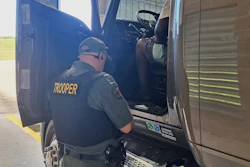
The Vermont Department of Motor Vehicles announced its Enforcement and Safety Division will officially become the Vermont Highway Patrol (VHP), effective immediately.
The name change better reflects the role of DMV enforcement officers, who receive specialized training in commercial motor vehicle safety, traffic enforcement, and crash prevention.
“The restored name will give Vermonters a clearer understanding of the public-safety responsibilities and reflect the continued focus on traffic enforcement, crash prevention, and saving lives on Vermont’s roadways,” said DMV Commissioner Andrew Collier. “Renaming to the Vermont Highway Patrol honors more than a century of history and better aligns its public identity with its broader highway-safety mission.”
Vermont DMV noted the VHP’s daily operations and longstanding commercial vehicle safety responsibilities will continue. Inspectors will maintain rigorous commercial vehicle enforcement and inspection standards while strengthening highly visible traffic enforcement in high-crash areas and other locations identified through crash data, community concerns, and coordination with local and state law enforcement partners.
Vermont truck enforcement has boosted activity recording truck and driver inspections over recent years, according to Overdrive and sister data company RigDig's analysis of federal enforcement data.
The state's now Highway Patrol-named unit's truck-enforcement specialists showed particular emphasis in 2025 on equipment violations in brakes, lights and tires categories, where the unit ranks just outside the top-ten toughest in our CSA's Data Trail rankings.
Vermont's a top-ten state for load securement, too, at No. 10 in the list of states with the highest percentage measure of securement violations among total infractions.
The VHP conducts traffic enforcement throughout Vermont (on the truck side, Vermont's just outside the top 10 for moving violations, too), including impaired driving, excessive speed, aggressive driving, distracted driving, seat-belt violations, and other dangerous behaviors. Efforts are often conducted in collaboration with municipal police departments, sheriff’s offices, state police, and other state and federal law enforcement partners.
[Related: Toughest states for moving violations]