











The battle over C.H. Robinson's thermonuclear $604 million verdict has boiled over from the courthouse into the media.
The mega broker in July lost the Lipe v. Lupus Superior case, with a Dallas County jury drawing some conclusions that could impact trucking in a huge way. (The jury found the driver for the carrier, Lupus Superior, was an employee of broker C.H. Robinson, for example.)
Since then, C.H. Robinson has said it "strongly" disagrees with the verdict and "will immediately appeal."
But before the Dallas County Court can decide whether to revisit the case or pass it on to an appellate court, a dispute spilled outside the court's confines.
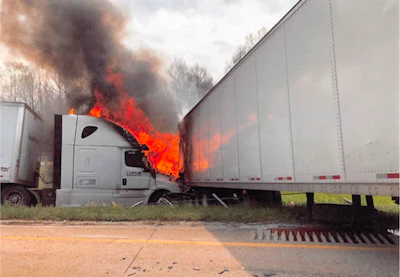
Arnold & Itkin, the legal team that won the case for the families of victims in Lupus Superior's March 25, 2021, triple-fatal crash, released press material that said the jury heard that "on the night of the crash, the driver told both companies he was too sick to keep driving. Instead of rescheduling the delivery, C.H. Robinson let him press on."
After Overdrive published that quote in a previous article, C.H. Robinson reached out to correct what it called Arnold & Itkin's "inaccuracies."
[Related: Brokers' new carrier-selection strategy after $604M C.H. Robinson verdict]
"Claims that the driver told C.H. Robinson he was sick or that we allowed him to continue driving are also false," a spokesperson for the broker said. "What is true is that the driver worked for Lupus Superior, he did not communicate with C.H. Robinson, and we did not supervise, direct, or control his actions."
Overdrive asked Arnold & Itkin about the dispute, and received hundreds of pages of legal filings, including a deposition from the C.H. Robinson rep who booked the load.
Records show, and C.H. Robinson does not dispute, that the broker did in fact learn the driver was sick.
The dispute was over whether the dispatcher, rather than the driver specifically, told C.H. Robinson about the illness.
In any event, records show that the dispatcher and broker went about rescheduling the drop of a load of Arizona Iced Tea. Arnold & Itkin say C.H. Robinson never rescheduled the load, but the text records between the dispatcher and broker show an effort to do so.
Yet the driver on the load, despite feeling sick and telling his dispatcher so, continued driving up until the accident.
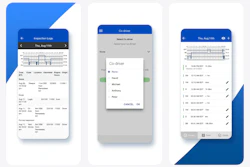
 On the left, chat records between the Lupus Superior dispatcher and the C.H. Robinson rep show the broker knew about the driver's illness. On the right, chat records show the pair attempting to reschedule the load, but just a half hour later the driver, who continued driving, would crash. Courtesy of Arnold & Itkin
Also, the driver had gone far off-route and falsified driving records, expert testimony and a deposition of Lupus Superior's legal representatives show.
In the end, three people died, and the case's real-world impacts don't stop there.
C.H. Robinson and the Transportation Intermediaries Association, in the wake of the Supreme Court's Montgomery ruling (the one that opened brokers up to new liability in the event their hired carrier crashes) have pushed for the Federal Motor Carrier Safety Administration to put out a list of high risk carriers to avoid, likewise a federal standard for carrier selection.
"Without a clear national standard that applies wherever a carrier's truck is traveling, carriers, brokers, and shippers are left with a patchwork of standards decided case by case, jury by jury," the broker wrote in a response to the verdict.
Lupus Superior "had safely completed nearly 270 loads for C.H. Robinson customers, and before the shipment the FMCSA had audited and renewed the carrier’s Satisfactory rating," the broker said.
Already, the post-Montgomery world has shifted carrier selection and vetting.
[Related: C.H. Robinson intros tougher carrier standards, new dedicated board]
With an appeal in process, why the media fight between C.H. Robinson and the winning legal team?
"My guess is it's more of a public relations battle than anything else," Doug Marcello, a transportation lawyer at Saxton & Stump, told Overdrive.
The broker could be as worried about what the market thinks as much as the court. C.H. Robinson's stock price was down about 27% since the Lipe v. Lupus Superior verdict.