










This playbook was written by an owner-operator who's seen success recovering most of thousands of improper deductions from a large broker -- with no lawyer, no courtroom, just documentation, knowledge of federal transparency rules, and persistence.
The 'fee' that starts the saga
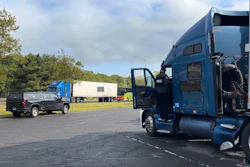
It's probably happened to you. The truck breaks down mid-route with a load on. The carrier reports it to the load's broker the same hour, sends photos and repair invoices, updates the broker every day, even arranges a replacement truck at its own cost with the broker's blessing.
Ultimately, the carrier delivers with clean proofs of delivery. On the phone, the broker suggests for all the carrier's trouble he'll incur a small late fee -- "a couple hundred dollars, nothing crazy."
But the settlement arrives thousands of dollars short, labeled only late fee. Emails asking for explanation get silence, then an all-caps reply: LATE IS STILL LATE.
Ten weeks later, that same brokerage returned most of the money and admitted in writing that the charge was "not according to internal policy" and that the broker "overcharged." Nothing about the facts changed in those 10 weeks. What changed was that the carrier stopped asking nicely and started building a file. This guide is that file, turned into a method any carrier can use.
[Related: Brokers' contract nickel-and-diming incentivizing speed, fatigue]
Winning the dispute before the wheels turn
Examine the "fees" and "fines" you're agreeing to with any rate con. Most cap the late fees: "up to $250 per day" is common language used. Know that "up to" indicates a ceiling, not an entitlement to that full amount.
If a broker ever deducts more than their own printed schedule allows, their own paperwork will be your best weapon against them.
Read your master broker-carrier agreement once, properly. Find five clauses and highlight them:
- The offset clause (can they deduct from future loads for liabilities on this one?)
- The venue clause (which court jurisdiction will resolve disputes)
- The notice clause (required notice in certified mail?)
- Any clause saying charges are only valid "in a signed writing"
- The confidentiality clause (what you can't share publicly)
Twenty minutes of reading could be worth thousands later.
Also check for a waiver of your rights to transaction records under 49 CFR 371.3. Many broker contracts quietly require you to sign away your federal right to access the record, which you're going to need. Know before you sign whether yours does.
At the shipper location: count, photograph, report to the broker -- before you leave the load site. Most contracts make you liable for count unless you report discrepancies before departure. If the count is off, or there's no seal, no scale ticket, or the trailer was shipper-loaded, put it in writing immediately and make the broker respond.
If there is any discrepancy in count or condition at pickup, ask the golden question in writing. Send the following text or email before you roll -- and screenshot the answer. A broker's written "yes" before transit has settled more disputes than any lawyer.
"BOLs attached showing [actual count/condition]. Please confirm we will be paid in full, $[rate] flat, with no deduction due to [the discrepancy]. Confirming before we depart."
[Related: Quick POD? It's high time for a new accessorial when dealing with certain brokers]
Building the record in real time when things go wrong
Report problems to the broker the same hour they happen, in writing. Breakdown, delay, damage -- whatever it is, the clock on your credibility starts when the problem does. Photos, repair invoices, repair-shop business cards: add everything in the email or text thread as it happens.
Recap every phone call by text -- immediately. This is the single most important habit in this guide. Verbal agreements evaporate; a text sent minutes later, that the other side never disputes, becomes powerful evidence. The dispute resolution described at the top turned on exactly one such text.
An example you're free to use yourself:
"Per our call just now: you're keeping us on the load, the replacement truck is approved, and the late fee will be approximately $[amount] -- 'nothing crazy,' as you said. Reply if I misunderstood anything."
If the broker stops answering, keep writing anyway. Your unanswered messages become the record; their silence becomes evidence. Never rage-quit a paper trail.
Save your call logs. Screenshots showing dates, times, and numbers prove conversations happened even when nobody recorded them -- and brokers often do record. Inviting a broker to pull their own recordings is something only the truthful party can do. Do it.
Broker transparency is your federal right
The Federal Motor Carrier Safety Administration is (slowly, yes) moving toward change on this front, but whatever their next move is, your bedrock right to review the record remains.
Federal regulation 49 CFR 371.3 requires every property broker to keep a record of each transaction -- including what the shipper paid and what the carrier was paid -- and gives each party to the transaction, including you, the right to review that record. This right has existed for decades, and is the single most under-utilized tool in a small carrier's toolbox. (Overdrive's recent broker and carrier vetting survey report revealed 66% of carrier respondents had never exercised the right by requesting the record.)
[Related: How owner-ops dodge shady brokers, ensuring freight's paid when due]
The catch, as many of you will know: broker-carrier agreements often contain the aforementioned clause requiring carriers to waive their right, and courts have enforced those waivers. Check your contracts.
The good news: FMCSA's active proposed rulemaking was designed to strengthen 371.3 even in its first iteration published in late 2024 -- since then, electronic records, production within 48 hours, and limits on waiver clauses have all seen discussion for potential inclusion in their proposal.
When comment periods open on the FMCSA rulemaking docket, file a comment. Carriers raising their voices is literally how this rulemaking got started. (A supplemental to the first iteration is currently awaiting approval before publication, which could come any day now, a new chance to raise your own voice.)
How to use current transparency rights. Recent Overdrive research shows most truckers (86%) think brokers' transparency waivers should not be allowed, and FMCSAʼs 2024 rulemaking proposal reaches for that outcome. Yet today, even if a waiver does exist in your contract, a formal records request nonetheless changes broker behavior -- refusing to show you the file while keeping your money looks terrible to a regulator or a judge, a surety, the broker's own management, too.
Language for the request you can use:
"Under 49 CFR 371.3 and our agreement, [Carrier] requests the complete record of the transaction for load #[___], including an itemized, line-by-line accounting of every deduction taken from our settlement, with supporting documentation. Please provide within 10 business days."
The escalation ladder -- climb it rung by rung
As is suggested in the No. 1 rung of the ladder below, you may never need to climb all the way to the top. Each of these steps holds potential to shake loose what you're due.
- The broker desk, in writing. One clear email: what was deducted, what you were told, and request itemization. Give them a chance to just fix it.
- Formal written demand. Cite the 371.3 records right and the specific clauses of your own contract (the fee cap, the "signed writing" clause). State a deadline.
- Go around the desk. Every large brokerage has a carrier relations address and an operations department. Operations enforces internal policy that the sales desk ignores -- in the story at the top here, one operations supervisor accomplished in five days what six weeks of emailing the broker desk could not.
- Owner-level demand letter. Sent by email and certified mail (check your notice clause), with a 10-business-day deadline and exactly what happens next: court in the venue their own contract names, court costs, and an FMCSA complaint. Calm, factual, no insults -- write every line as if a judge will read it, because one might.
- The broker's surety. Every licensed broker carries a $75,000 bond (BMC-84) or trust (BMC-85). Find the surety on FMCSA's Motus site -- knowing the broker's DOT# will make pulling up their profile there much easier than just searching by name. Drill down into their operating authorities to pull up the surety information. Now file a claim for what you are owed. (Produce haulers, know the trap: fresh fruits and vegetables are "exempt commodities" and the bond does not cover them. Your claim will be denied. File anyway, and ask the surety to open a brokerage inquiry: brokers answer their surety even when they ignore you.)
- FMCSA complaint. Free, ten minutes, at the agency's complaint site. It won't get your money back, but it creates a permanent federal record of the conduct.
- Small claims court. Cheap (often $50–$150), no lawyer needed, and your written file is your case. File in the venue your contract names. One caution: check for a fee-shifting clause first in the contract -- some make you pay the broker's attorney fees if you sue and lose outright.
Negotiate like a pro
Concede what's true. If the load was late, never argue it wasn't -- you'll lose your credibility along with the argument. Fight the amount, not the facts: "Even if everything you say is true, your own contract caps this at $[__]." That sentence can win a dispute.
Do the ceiling math out loud. Hypothetical: contract says fines are "up to $200/day," and the broker claims two days late, and withheld $2,000 from the payment. Their own language caps them at $400 -- they owe $1,600 back before you argue a single fact.
Set your floor before any offer arrives. Decide in advance the minimum you'll accept -- a rational floor would be the broker's own worst-case story, calculated from their own contract. When they hit your floor, take it and drive away.
Chasing the last few hundred dollars into a courtroom is how winners turn into losers.
Get closure in writing. Create your credit memo to the broker, acknowledge the amounts due, and be sure to include this sentence: "This load is closed with no further deductions or offsets."
At once, words are not credits -- wait for the money to post.
Stay professional with the person fixing the problem. The supervisor who reverses the charge is not the broker who took it. Thank them. You may haul for that company again -- and now they know your MC number means "pays attention."
[Related: Master the fine art of negotiation: Resist capitulation in today's go-go freight markets]
What not to do (This part protects you)
Do not post broker names, emails, screenshots, or rate amounts online. As suggested earlier, most broker contracts contain confidentiality clauses covering rates and their communications -- sharing them can hand the broker a case against you right after you've won.
It's also why this guide names nobody. Teach the method, not the case.
Likewise don't threaten, insult or exaggerate -- in any message, ever. Your restraint is evidence of your credibility.
Don't solicit the broker's customer. Calling a receiver to ask one factual question about your own delivery is fine. Asking for their freight violates most non-solicitation or "back solicitation" clauses.
Don't let a $500 fight cost you $5,000 in time, stress and parked-truck days. Know your number; respect your own time.
Finally, don't give up because the first three emails were ignored. Silence is a strategy -- most carriers quit, and the deduction becomes profit. Persistence, in writing, is the whole game.
Improper deductions survive on one assumption: that a small carrier won't fight back. Every carrier who sends a records transparency request, files a surety inquiry, or walks into small claims with a clean file makes that assumption more expensive for brokers to make.
Brokers behave differently toward carriers they know are paying attention -- and toward an entire industry that is.
The paperwork you keep on one load protects you.
The voice you raise, though, that protects everyone.
Download Overdrive's 2026 brokered-freight research report, based on the survey responses of hundreds of owner-operators, for tactics around surety claims, broker vetting and transparency, via the short form below.