











Carrier vetting giant Highway told Overdrive it plans to launch a new electronic logging device provider certification program after reporting revealed ELD-cheat devices integrated in its platform.
- Overdrive identified ELD providers with Highway integrations that admitted to allowing HOS cheating.
- Highway has recently gotten stricter with ELD integration policy, shutting some ELD-exempt haulers out of freight, but didn't commit to kicking out the identified ELD cheats.
- A planned update to ELD certifications on the platform will be a voluntary program. Broker and carrier demand for ELD cheating appears strong.
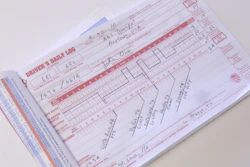
Overdrive has long reported on the trucking industry’s open secret: Widespread hours-of-service cheating via easily manipulated, hackable ELDs on the Federal Motor Carrier Safety Administration’s approved devices list.
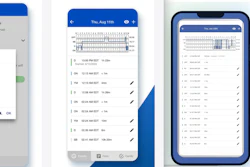
Overdrive recently found six ELD companies registered with FMCSA and sharing a mailbox at a single-family home in Delaware. Two of those ELDs, Nexus ELD and Leader ELD, promoted their integration with the Highway carrier monitoring/vetting service on their websites, among other big trucking tech platforms.
Overdrive contacted Leader ELD and asked if they allowed drivers to add time to their clock. “Yes,” the rep on the phone answered.
Then they made it clear they didn’t mean simply editing mistakes on logs, adverse exceptions, or some misunderstanding about what “adding time” meant.
“For example, let’s say a driver has only 30 minutes left in the drive time and he needs more hours, like 3-4 hours. That won’t be a problem. I will provide, we will add to the drivers 3-4 more hours," the Leader ELD rep said.
A recently revoked ELD provider also admitted their platform allowed hours cheating, and said they were integrated with Highway.
Nexus ELD did not confirm hours cheating.
Highway advertises ELD-based freight tracking for all loads, and has long irked owner-operators by “overstepping” with its requests for documentation and ELD tracking. Since the landmark Montgomery v. Caribe Supreme Court case shifted the broker liability equation with crashes, Highway has doubled down on ELD requirements in its system.
[Related: Highway denies selling, storing or otherwise snooping on ELD data]
In July, Highway implemented mandatory ELD connections for carrier ID verification in its broker-facing service, requiring brokers to manually override the ELD connection if they chose an ELD-exempt carrier or a carrier without an integrated ELD.
But now it’s clear that Highway does allow some ELD cheating platforms to integrate on the platform. Asked about Leader ELD’s integration, Highway said that as long as an ELD is registered with FMCSA, they can onboard.
The National Motor Freight Traffic Association estimates approximately 75% of nearly 1,000 registered ELDs are white labeled, meaning they share core technology but are registered under different names. Many with overseas call centers allow backend hours cheating, similar to what Leader ELD described.
Highway offered this statement:
“Over the past five years, Highway has worked with hundreds of ELD providers. In certain cases, we have paused or ended integrations in response to security or data integrity concerns identified by Highway or regulatory action, including FMCSA decisions. We have communicated relevant updates to customers and carriers as appropriate. Our priority is maintaining a secure ecosystem for customers and their cargo, which means carefully evaluating credible analysis and intelligence and taking appropriate action when warranted -- whether it involves an ELD provider or another partner.”
Chris Atkinson, CEO of the Class 8 carrier vetting and load matching firm, which relies on data from trucks' electronic control units to evaluate real capacity, and even real-time axle weights, felt that either Highway knows about ELD cheating and does nothing, or doesn’t trust its own data.
"Highway is already using ELD data to verify that trucks are active, that a carrier has capacity, and that those trucks are moving where they’re supposed to," he said. "They have to interpret that data for their products to work. If manipulation is creating material inconsistencies in the data they receive, I would expect them to pick up on that and investigate.”
Presented with Leader ELD's admission of enabling hours cheating, and top researchers identifying hundreds of potentially fraudulent ELDs, Atkinson noted he expected a bit more out of the Highway service.
“If an ELD vendor is offering to falsify logs," he said, "the question goes beyond whether Highway collects hours of service. They’re relying on that vendor’s data to give brokers confidence in a carrier. They should be able to explain why they trust that data, what checks they’ve done, and how they respond when the provider’s credibility is called into question.
“Either they know the data is accurate and know about falsified data, or they don't know and aren't certain of the data's validity.”
Given a chance to respond to Atkinson, Highway said it did analyze vehicle locations, but didn’t look into hours manipulation.
“We maintain internal standards that both the data received from an ELD integration and the integration itself must maintain in order for the integration to remain active in our system. As a part of those standards, we analyze vehicle locations to identify patterns such as impossible travel or location spoofing,” the spokesperson said. “These checks focus on unusual behavior at both the individual vehicle and network levels.”
So if an ELD shows impossible travel, “strong solo” hauling, or a reporter tells you an ELD on your platform admits on a cold call that they enable cheating, does that mean it gets taken off the network?
“When anomalies arise, the integration is considered for revocation,” the Highway spokesperson said. “Highway does not have access to hours-of-service (HOS) data and does not conduct safety reviews like those performed by FMCSA. Our ELD analysis is designed to detect identity, data-integrity, and fraud concerns.”
[Related: How carrier vetting changed, before and after big SCOTUS ruling]
Will Highway do anything about ELD cheaters on the platform?
Highway teased the release of a new ELD certification standard, part of a bigger Certified Network that includes holding certain providers to a higher standard than, for example, simply being registered with FMCSA.
“We are excited to bring the Highway Certified ELD Provider program to life soon, as part of the Highway Certified Network,” said Highway. “Brokers and carriers should expect to hear more about the ELD providers who commit to uphold certification standards from us in the coming days.”
The product launch doesn’t mean they’re kicking out ELD cheaters.
The Highway Certified Network currently includes insurers who take some extra steps to get certified, but Highway still accepts carrier certificates of insurance from insurers outside that network.
Highway’s certified ELD provider program sounds similar.
“Certified Partners in the Highway Certified Network are service providers that commit to standing behind the data they contribute to the network and adhering to Highway’s certification standards,” Highway said. “By doing so, they demonstrate a commitment to the integrity and reliable transmission of the data brokers and carriers rely on.”
Asked again what exact standards Highway will have, and if those standards will exclude confessed ELD cheaters, the company again kept its response open-ended.
“The standards include rigorous technical requirements for data integrity and transmission,” Highway said. “We’ll be able to share more details once the program is live.”
Highway said it would explain which ELD providers meet their standards, and which do not. Brokers, meantime, can choose to work with carriers whose ELDs don’t meet that standard.
With ELDs integrated in their systems, vetting platforms like Highway have the technical expertise and market leverage to crack down on HOS cheats.
Yet for platforms' broker customers, there just may not be an appetite for it.
[Related: Revoked ELD maker reveals 'huge' demand for HOS-cheat devices]
It's clear at least that plenty freight middlemen do choose to work with the HOS cheats. The Commercial Vehicle Safety Alliance just this year instituted a new out-of-service code for ELD tampering. Reporting in Overdrive made clear law enforcement progress identifying those who use ELD tampering to produce picture-perfect logbooks to roadside inspectors.
Some states have ID'd a sizable number of such violations, while others were admittedly "behind the curve."
The 2026 broker and carrier vetting survey from Overdrive probed readers' experience with vetting systems, in addition to other topics. Download the survey report below for full results.