











This week and last, installments in the “Roads not taken” series, which I put together for the January issue of Overdrive, have taken a look at the immense variety of pathways drivers follow through the trucking industry after, for whatever reason, coming off the road.
While doing that is unlikely to be the primary goal of this audience, it’s certainly true that driving’s not for everyone, of course, and with age and medical issues it can become a necessity. If you haven’t had a moment to check it out, the series tells the stories in part of various owner-operators and drivers now working in brokerage and/or dispatch, recruiting, site management, operations, training, safety, maintenance or other roles at carriers. Catch part 1, from which you can get to the other parts, via this link.
Sometimes, it’s not another job, so much, that a driver goes after, however. Case in point: Owner-operator Robert Jordan, Overdrive‘s 2006 Trucker of the Year and the man that invented the Idle Free reefer link to allow a reefer hauler’s reefer unit to provide power to an APU on the truck.
Anybody running an Idle Free unit today? The company has grown well beyond Jordan’s reefer link solution.
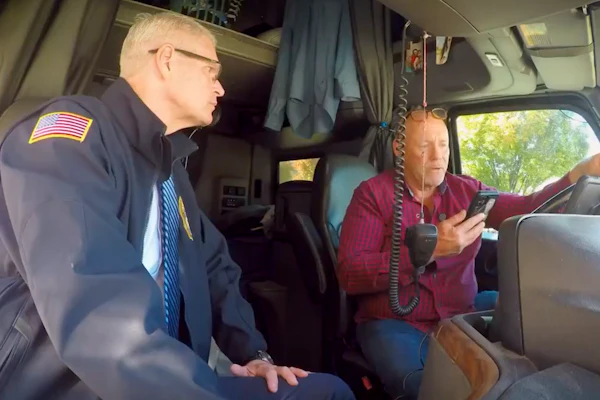
The man pictured at the top of this post, Chris Barbeau, a driver for Mig-way Inc. based in Charlotte, N.C., is on a similar if much less far along trajectory, if he has his way.
You may recall his Dudad wireless dock-green-light alert device built in order that drivers might rest during long load/unload periods and get an automated wake-up call or otherwise be alerted, rather than having to rely on line of sight, a shipper/receiver or someone else. I wrote about the device last year when he floated the idea via the Kickstarter.com crowd-funding site to see if he might be able to raise a good amount of seed money to fund moving into more automated production.
Though that funding campaign was a failure, he’s begun work on making molds for the parts that make up the Dudad now, he says, and until that’s done he continues to fill individual orders he’s bringing in from operators utilizing a Da Vinci make 3-D printer, more commonly used for rapid prototyping than full-scale production but capable nonetheless.