










Trucking news and briefs for Thursday, June 18, 2026:
- One of the largest truck and engine OEMs is updating its DEF derate software.
- One-day blitz in response to community concerns leads to OOS orders.
- State completes CDL testing process updates.
Daimler rolling out DEF derate update
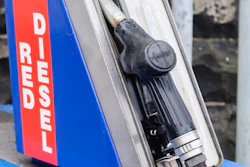
Daimler Trucks North America is rolling out software updates to more than 330,000 Detroit engines to meet the latest Environmental Protection Agency guidance on diesel exhaust fluid (DEF) inducements, or the timing of when DEF problems result in engine derates.
DTNA’s latest Freightliner and Western Star vehicles equipped with Detroit engines are already shipping with the updated software. In February, the company began rolling out the same software to approximately 330,000 in-service vehicles, covering DD15 engines (model years 2021-2025) and DD13 engines (model years 2022-2025). These updates will continue throughout 2026.
“For too long, small businesses like farmers, truckers, and construction workers have borne the cost of unreliable DEF systems through expensive repairs and needless downtime,” said U.S. Small Business Administration (SBA) Administrator Kelly Loeffler. “This is why the SBA has been calling on OEMs to implement recent EPA guidance" across existing engines, not just new ones.
That guidance requires all new diesel on-road trucks starting in model year 2027 to be "engineered to avoid sudden and severe power loss after running out of DEF." Additionally, the guidance states that vehicles already in use will undergo "the necessary software changes" to extend the timeline for engines derating due to DEF problems.
Under the new guidance, the speed limit in the final derate stage increased from 5 mph to 25 mph, and the time to reach final inducement for component-related issues has been extended to give operators more time to complete repairs while helping minimize downtime.
SBA welcomed "Daimler Truck North America’s decision to equip vehicles with updated DEF inducement software, a common-sense step that gives operators greater reliability while reducing costs," Loeffler added. "This is exactly the kind of relief that the hardest working Americans deserve.”
[Related: EPA announces end to 5-mph DEF derates for new and existing trucks]
The updates are designed to improve reliability and reduce unplanned downtime, DTNA said, giving operators more flexibility to address issues without unnecessary disruption to their operations.
Following those EPA guidance updates issued in August 2025, DTNA incorporated new inducement, or derate, parameters into its software. DEF inducements are built-in safeguards on trucks that ensure emissions systems function properly by reducing vehicle speed and power when issues are detected, such as low DEF levels or reduced performance of the Selective Catalytic Reduction (SCR) system.
That slowdown “induces” the driver to correct the issue -- typically by refilling the DEF tank, repairing faulty sensors or components, or performing a regeneration cycle -- helping maintain emissions compliance while protecting air quality.
[Related: How truck and engine OEs might approach EPA's new DEF-derate guidance]
New Hampshire enforcement blitz parks 5 drivers, 7 trucks
Concerns raised by residents in Plaistow, New Hampshire, about the unsafe operation of commercial vehicles in the town led to a one-day enforcement effort that resulted in dozens of violations.
The New Hampshire State Police and Plaistow Police Department conducted the effort on Friday, June 12, during which more than 30 traffic stops of commercial vehicles resulted in the discovery of nearly 150 violations.
Members of both agencies worked together on an enhanced enforcement patrol to deter and detect excessive speed, violations of weight restrictions, driving on restricted roads, as well as other violations.
New Hampshire inspectors in 2025 issued fairly average shares of their total violations in most tracked categories, but volume-wise truck enforcement was an upward trend through December.
Overdrive's sister company RigDig, creator of our Truck History Report lookup, shows the state slowing violations issuance slightly this year, if the current pace holds. Efforts like the one recent target saturation in Plaistow could yield more violations, however.
Recent inspections not reflected in the charted numbers found 146 violations, resulting in five drivers and seven vehicles placed out-of-service for critical safety violations or improper driver credentialing. Multiple summonses and warnings, officials said, resulted for issues ranging from speeding to drivers operating in violation of federal out-of-service orders.
A previous joint enforcement initiative conducted in January resulted in the discovery of 106 violations on commercial vehicles.
[Related: Brokers want FMCSA to publish list of 'high risk' motor carriers]
Georgia completes update to CDL skills testing process
The Georgia Department of Driver Services (DDS) announced this week it has completed the transition to an updated commercial motor vehicle skills testing process. The process began back in early 2024.
The Modernized Commercial Driver Testing was redesigned by the American Association of Motor Vehicle Administrators (AAMVA) and approved by the Federal Motor Carrier Safety Administration (FMCSA), Georgia DDS said, and provides “a simpler and more effective skills testing process that best assesses an applicant’s readiness to operate a commercial motor vehicle (CMV) safely.”
“The commercial driver’s test has been redesigned and streamlined with new national standards to make obtaining a CDL more efficient without lowering requirements and most importantly not compromising safety,” said DDS Commissioner Angelique B. McClendon. “Applicants are tested on real-world scenarios that all focus on safety critical items.”
The updated skills test remains in three parts: the Vehicle Inspection (VI), the Basic Control Skills (BCS) test and Road test. The VI and BCS were updated during the modernization process.
The new VI requires fewer items, and the applicants are allowed to use a checklist (provided in DDS’ “CDL Study Guide”) for the order of inspection. The inspection focuses on knowledge and safety and contains items a driver would typically experience on the job, the department added.
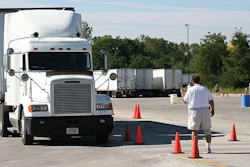
The BCS portion of the driving exam is conducted on a smaller footprint and tests applicants on: Forward Stop; Straight-Line Backing; Forward Offset Tracking and Reverse Offset Backing.