










Operating with motor carrier authority, you are not only business owner and driver but sometimes freight agent/broker and most definitely sales rep, among other hats that owner-operators leased to a motor carrier don't often have to wear.
As you establish yourself with freight along any lane -- say, Lexington, Kentucky, to Nashville, Tennessee -- you’ll encounter businesses consistently moving freight along that lane. Taking those loads and servicing them well long-term can make those shippers direct customers with time.
Owner-operators who play the long game of earning trust of their business partners are engaged in what might be the best marketing plan a small trucking business owner's got. Provide consistent and dependable service, and the shipper’s bound to recognize and appreciate it.
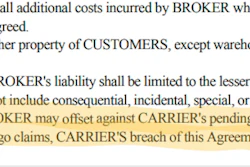
Most brokers do prohibit direct carrier solicitation of their customers with prohibitions against “back solicitation” in contracts, a carrier approached by the shipper might effectively ink his/her own contract with that shipper to take on as much freight as they can give you.
As we've shown in earlier parts of the Independence and Growth section of Partners in Business, direct freight with shippers underlies the success of many a growing small fleet. For those with just one truck and motor carrier authority, too, there’s plenty evidence of more stability in the business model than for those who rely solely on brokers and load boards.
As one owner with a longtime customer said in 2023, “In 10 years of doing this, I have yet to not get paid on a load” -- something that most certainly isn’t always the case when working with brokers.
Marketing an owner-operator business
It's about more than the obvious: A sharply designed company logo festooned on the side of a trailer, on the doors, hats, t-shirts, business cards and the like.
Building a routine of phone calls to customers or potential customers, trusted brokers included, can eventually open the door to premium freight opportunities.
Keep a pro business card at the ready for any interaction with shipper/receiver personnel. Write down your phone number on that card when you give it to anyone. It will help both with prospecting and cementing those relationships over time, too.
Too many new to trucking with authority rely on big broker boards as a primary source for freight. Yet that almost wholly reactive approach leaves owners at the mercy of fast spot market fluctuations and can to lead to short-term thinking and inconsistent revenue.
The better route? Proactively setting time aside to work the relationships you have, likewise new ones you want to create. Stay in contact with both existing and potential customers, and keep those contacts always top of mind, even if it takes months or years to bear fruit.
Invest time, too, in standing out online. Given the bulk of the work of trucking happens in the physical world as opposed to the digital, online might not be your go-to marketing venue, but in today's world it’s essential to establishing credibility.
 A key marketing piece for any trucking business is a central company website like these, from recent-history Overdrive Small Fleet Championship finalists (clockwise from top left) LNL Trucking, Hell Bent Xpress, and John McGee Trucking.
More and more, customers expect to find you online in a way beyond just an MC# check-in the federal system. When they don’t, they're likely to feel unsure about your company. A visible online presence tells customers you’re real, and it gives them a taste of what it would be like to do business with you.
Ultimately, you want a customer to feel like you’re a trusted colleague.
Online presence can help prospecting for new customers. You can expand your reach beyond the immediate geographic vicinity and find clients in the friend-of-a-friend who saw your LinkedIn post, or the business owner in another state who found your website via an online search.
Leverage your Google Business Profile. This will be what your customers or prospects see when they turn to Google Maps in search of you or generally for trucking services, especially if they’re targeting a specific geographic area. When they search for “trucking services” or “small truck companies” in your area, a Google Business Profile ensures you’re in the local search results.
To take full advantage, the profile needs to be complete and accurate. That means every section should be filled and kept up-to-date with correct information. An out-of-service phone number or a broken website link looks amateur and reflects poorly on the business.
Photos of your trucks and/or trailers could help illustrate equipment safety and establish trust. “Action shots” of goods being loaded or unloaded, maybe with a happy customer in the shot, are even better.
Advantages of LinkedIn. The LinkedIn social site allows business owners to make connections with customers, but it really shines as an avenue for showing your thought leadership as a small trucking company owner.
Follow prominent trucking voices, join groups like Overdrive's Trucking Pro, and learn what issues are impacting the business. Find others' insights and add your own -- potential and current customers might see you’re knowledgeable about the industry and invested in keeping your trucking practice current.
When you’re on LinkedIn, you reframe yourself as more than an experienced, trustworthy driver -- people will remember that you’re a fellow business owner, too, one who's likely to understand their own business's transport issues and potentially solve them.
[Related: How to brand your owner-operator trucking business when you don’t own the trailer]
Build the company website. Too many small carriers either have a bad website or none at all. They’re missing opportunities, limiting growth by refusing to meet customers where they are -- online.
Think of your website as your digital storefront. It's often a customer's first impression of your company, and it needs to shine. Include photos and videos of the highest quality you can produce -- visitors love to see real images of your business rather than stock images.
With a few, key online assets in place, boost effectiveness with “trust indicators” like online reviews. Encourage every customer to leave a review on your Google Business Profile or within big load boards' directories. Potential customers check them, and even if they’re not all 5-star glowing reviews, they can help sell your trucking company.
Closer to the broker: The power-only option
 Overdrive in 2020 launched its Small Fleet Champ award program to recognize small fleet owners who have grown their operations beyond being a one- or two-truck outfit to having between three and 30 trucks. You can find profiles of finalists and winners from the first five years of the program's history, and plenty of valuable profit-enhancing tactics and long-term business strategies, in this section of OverdriveOnline.com.
While power-only arrangements with large carrier-affiliated brokerage divisions have been somewhat common for years, non-asset brokerages and shippers such as Amazon via its Relay platform are increasingly getting into the game as a way to more seamlessly meet freight transportation needs and deliver some of the benefits of power-only business models to contracted carriers. Those include detention reduction with drop-and-hook freight opportunities, better utilization for better profit, trailer ownership cost avoidance and more.
Parking ease is one of the greatest benefits for power-only operators, with more opportunities to find a parking spot between loads. As with leasing to a motor carrier, there’s also a relative ease of entry without associated trailer costs, and it’s possible to approach a power-only operation like an independent riding the spot market waves for those who thrive in that high-risk, sometimes-high-reward model heavy on load-to-load negotiation.
Independents find new freedom to jump between different brokers and their digital platforms, very uncommon leased to a carrier.
All of these factors have helped seed growth in power-only programs, whether at large carrier-affiliated brokers or not. Traditionally non-asset-based brokerages increasingly offer power-only opportunities to partner carriers, as well, making it easier for power-only independents to find customers.
It’s worth noting that there are some serious considerations when it comes to insuring the variety of trailers you pull as a power-only operation. If you get it wrong, neither yourself nor your customers who own the trailers will be happy. In fact, it can financially cripple you and potentially put you out of business.
Every insurance company has differing policy and claims rules when it comes to the two types of insurance to cover those trailers: so-called trailer interchange and non-owned trailer coverages.
Likewise, every customer or truck broker has differing insurance requirements to do business with them. It is imperative you consult with your insurance agent and disclose to your agent the exact nature of your business agreement with all your customers, including brokers you're hauling power-only for. Only then can your agent assist you in securing the correct trailer coverage to meet your insurance needs.
[Related: Insurance requirements unique to power-only trucking: Trailer interchange v. non-owned trailer]
Cash flow management, insurance requirements for owners with authority
It’s not unusual for an independent carrier to wait 30, 60 or even 90 days to get paid. Work in a broker, even a shipper, with bad credit, and you might never get paid. An initial cash-flow lull can make it extremely difficult to launch your business.
- Cash and credit: Your ultimate goal should be to have enough cash in reserve to operate without borrowing. Many an owner-operator or small fleet owner has found debt-free operation to be both freedom-enhancing and likewise a natural check on bad impulses that lead to even worse decision-making. Nonetheless, adequate cash reserves may take months to accrue. As you work toward building your reserves, consider a revolving line of credit with your bank. You also can use a home equity line of credit, but understand that if you’ve borrowed too much and your business goes belly-up, you could lose your home.
- Broker quick-pay: The rise of smartphones and other new communications technologies has opened payment options to brokers that have offered quick-pay services to carriers for years. Those rates, as with factoring prices, are coming down. Most factors now offer to match quick-pay rates. More traditional brokers also are migrating to mobile systems that are speeding up the payment delivery process.
- Factoring loads: The ability to control cash flow can make or break a trucking business. Using factoring companies to handle your receivables gives quick access to cash to fund day-to-day operations -- at a cost, of course. Read more about factoring in the Starting Line section of PIB.
Get ready for sticker shock with insurance. A carrier by law must have liability insurance, as detailed in the Trucking and Other Insurance section of the PIB playbook. Most freight partners will require cargo insurance. A $1 million liability policy and a $100,000 cargo policy is recommended. Obtain insurance within the first two weeks of the DOT number being filed to avoid delays in authority processing or having it dismissed.
In recent years, new owner-operator businesses have experienced sticker shock at this step in the authority process, given the rising cost of liability insurance for new entrant carriers and across freight niches. See the Trucking and Other Insurance PIB section for more detail about what to expect, ways to save.
Read next: Do-or-die preps for the New Entrant audit, required for all new carriers