










Cargo theft rings have gotten more and more organized over time -- more insidiously effective, too. In recent years the situation's gotten so bad it's spilled into mainstream news, crossing into the wider public's consciousness.
In 2025, the American Transportation Research Institute published a research report called “The Fight Against Cargo Theft,” in which researchers made clear that trucking businesses of all shapes and sizes face an often uphill battle marshaling law enforcement resources in that fight after a theft occurs.
Cargo insurers could be an ally in that battle, though the trust situation between carriers and their insurance providers is such that large shares of carriers who've experienced thefts don't ever report them as claims for fear of premium-cost cosequences.
According to the ATRI report, just 56.3% of carriers hit by a theft said all were reported to their insurance company. A much smaller percentage of brokers and other logistics service providers (LSPs) reported their cargo theft incidents to their insurance carrier.
More than a quarter of respondents in each category did not report any cargo theft incidents to insurance. Reasons other than the basic fear of insurance-premium consequences:
- Below deductible/low value -- The theft was below the plan's deductible or had a small financial impact.
- Administrative hassle -- Due to the administrative costs of reporting, some carriers will opt to avoid reporting.
Yet as in cases of beating back outsize tow bills or fraudulent-crash schemes, insurers motivated to assist with their own investigative resources could certainly be an ally toward recovery, with law enforcement engagement.
Low recovery prospects post-theft up the ante on carriers' prevention
Most motor carriers do report incidents to authorities, yet the cost-benefit of the reporting and investigation effort doesn't move the needle for many, as cases are rarely resolved. ATRI found a large percentage of cargo stolen from motor carriers (73.5%) is never recovered.
Brokers/LSPs reported better success in recovery, with just 21.4% of thefts not recovered at all.
ATRI attributed the difference in part to the higher value of thefts from brokers/LSPs, who may have a greater financial interest in recovery. Additionally, since motor carriers’ largest theft category was the basic pilferage of pieces of a load, there's less incentive for small-theft investigation.
Looking beyond law enforcement and insurers to the courts, the ATRI report indicated carriers' perception of the judicial system's scant interest in prosecuting cargo theft. Likewise, the notion that current cargo theft penalties are insufficient, limiting the system's capacity to combat the issue.
Prevention, though: Owner-operators, fleets and drivers have at least a measure of control over it. As sophistication of organized rings' operation has grown online with so-called strategic theft through fraudulent communications hitting brokers and other LSPs hard, there's a role in prevention for what the National Motor Freight Traffic Association has dubbed basic "personal cyber hygiene" for individual owner-operators, among plenty more in the way of best practices for online business and communications.
[Related: 'Personal cyber hygiene' for owner-operators to avoid online scammers]
More top-line conclusions about cargo theft response in ATRI's report, too, up the ante for truckers' efforts to double down on preventive measures.
- A large majority of carriers report cargo theft instances to law enforcement, yet only slightly more than half of brokers/LSPs do.
- Reality is that a large percentage (73.5%) of cargo stolen from motor carriers is never recovered, according to survey respondents.
- The cost-benefit of law enforcement involvement and investigation in the aftermath of a theft often comes out as a losing proposition for carriers.
Prevention thus ought to be goal No. 1 for truckers of all stripes. Tried-and-true tactics are part of the prevention playbook, with some new wrinkles for owner-operators and other truckers and their freight partners.
[Related: Prime time for cargo theft: $18M vanishing every single day]
First line of theft defense. Owner-operators/drivers are their own best first line of defense against would-be thieves. Carrier respondents to ATRI's survey recommended driver training for situational awareness and reasonable suspicion, along with clear shipment-specific instructions.
Policies mentioned included the obvious:
- Removing keys from unattended vehicles.
- Using team drivers for high-value loads to keep the freight in motion.
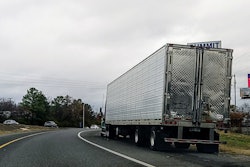
A common technique of pilferage and other thieves: following a truck from a pickup location because they know what will be on board. The first time it parks, they break into the trailer.
The farther you drive without stopping from that pickup location, the less likely you'll be followed for the entire time. It's been a tried-and-true best practice, among others related to operational security, for many years gone by:
- Don't stop after leaving a pickup location for long distances to avoid being followed from a facility by a would-be thief.
- Park in well-lit locations that have security and monitoring, and use only designated, overnight parking zones.
- Only drop trailers in a secure, fenced yard, and do not drop trailers overnight.
- Don't unhook a trailer if it isn't necessary.
- Back trailers against walls/other trailers to limit door access.
For company processes and policies, carriers recommended conducting routine security audits and compliance reviews, enforcing regular password changes for internal systems, using publicly available tools to vet customers and brokers, and more.
[Related: How owner-ops dodge shady brokers, ensuring freight's paid when due]
Among other recommendations:
- Review bills of lading and compare them against rate confirmations. If there are changes to the shipment details, such as a new delivery address written on the BOL, take load confirmation steps such as requiring an updated BOL directly from the customer/shipper.
- Restrict access to your insurance information and certificates of insurance (COI).
[Related: Safeguard your trucking business’ certificate of insurance to avoid becoming an ID theft victim]
NMFTA publishes a cybersecurity best-practices guidebook geared specifically toward owner-operators and small fleet businesses that's available as a free resource via this link.
Equipment, freight security. Longtime carriers recommend all manner of padlocks, disk detainer locks and kingpin locks; custom trailer door seal covers; and manual air brake knob ("air cuff") locks.
For fleet facilities: fencing, perimeter barriers, locked containers, all bolstered by lighting and surveillance systems such as closed-circuit television (CCTV) or onsite guards. GPS tracking, geofencing, and real-time monitoring systems help carriers of all shapes and sizes maintain good visibility of assets.
[Related: New cable-less tracker for equipment, freight security monitoring]
Make security mind-set contagious. Spread your own security-minded sensibility through your small fleet as you grow, helping build "security culture" across the entire supply chain:
- Train drivers in theft prevention and situational awareness
- Promote awareness and accountability to all staff
- Provide support for driver vigilance (tools for verifying authenticity of documents and reporting suspicious activity)
For company owners and representatives in a position to make a difference with respect to any of those measures, the rise of "strategic theft" underscores the need for collaboration among all parties along supply chains.
[Related: Beware double brokers: Getting involved with one can be a huge knock on credibility]
Legislative efforts could bear fruit in the states. Comprehensive anti-cargo theft tools developed through model state legislation
Find more on legislative recommendations ATRI derived from its survey of carriers and brokers in 2025 in its full report available for download at that link.
Read next: Income replacement insurance, disability, downtime claims